If you can only get one crystal to start with, amethyst is the answer for most people. It’s the most versatile beginner stone — it addresses anxiety and mental restlessness, supports sleep, works in meditation, and is gentle enough not to overwhelm someone new to working with crystals. If you want two stones, add rose quartz for emotional support or black tourmaline for grounding and protection.
That’s the short answer. The longer answer depends on what you’re actually dealing with — because the right first crystal varies significantly based on your situation. This guide gives specific recommendations for the most common starting points. For a complete breakdown of all seven essential beginner stones and what each does in depth, our complete guide to the seven essential beginner crystals covers the full picture.
Why Your First Crystal Matters More Than You Think
The first crystal you work with sets the tone for your practice. Get one that feels immediately relevant to your life — one whose effects you can actually notice — and you build confidence in working with crystals. Get one that doesn’t connect with where you are right now, and it sits on a shelf unused while you wonder what all the fuss is about.
This is why generic “best crystals” lists are less useful than they seem. A list of the ten most powerful crystals doesn’t help you if what you need is sleep support, and none of the ten are particularly suited to that. The question isn’t which crystal is best in the abstract — it’s which crystal is best for what you need right now.
By Situation: Your Specific Starting Point
If You Have Anxiety or Can’t Quiet Your Mind
Start with amethyst.
Amethyst’s defining quality is its ability to reduce mental noise — the circular thinking, the racing thoughts, the low-level anxiety that sits beneath daily life for a lot of people. It doesn’t sedate or dull awareness; it creates a quieter internal environment in which the mind settles more naturally.
For this use, keep a tumbled piece in your pocket or on your desk throughout the day. Place a larger piece on the bedside table at night. Give it two to three weeks of consistent presence before evaluating — the effect is accumulative rather than immediate.
If anxiety is your primary concern and you want to understand exactly what amethyst does and how to use it for this specific purpose, amethyst’s full properties and uses go into the detail that this overview can only summarise.

If You’re Struggling to Sleep
Start with amethyst — or add selenite if you already have it.
The sleep-anxiety overlap is real, and amethyst addresses both simultaneously. A piece on the bedside table or under the pillow is the standard placement, and it addresses the specific sleep problem most people face: a mind that won’t stop running when the body wants to rest.
If you already have amethyst and sleep is still the issue, adding selenite creates a notably different quality in the sleep environment. Selenite’s high-frequency, light energy raises the overall vibration of the room in a way that many people find promotes deeper, more restful sleep. A selenite wand on the bedside surface alongside the amethyst is a simple and effective combination.
For the full breakdown of which sleep stones work for which sleep problem type, our complete sleep crystal guide covers everything in one place.

If You Feel Drained, Overwhelmed, or Energetically Scattered
Start with black tourmaline.
The grounding and protective quality of black tourmaline is the most physically immediate effect of any stone on this list — most people notice it within the first day or two of carrying it. The settled, anchored feeling it produces is particularly helpful for people who feel pulled in multiple directions, take on other people’s emotions easily, or work in high-energy environments that leave them depleted by the end of the day.
A tumbled piece in your pocket is enough to start. You don’t need to actively work with it — the passive grounding effect of carrying it is its primary beginner benefit.
If You’re Going Through Emotional Difficulty
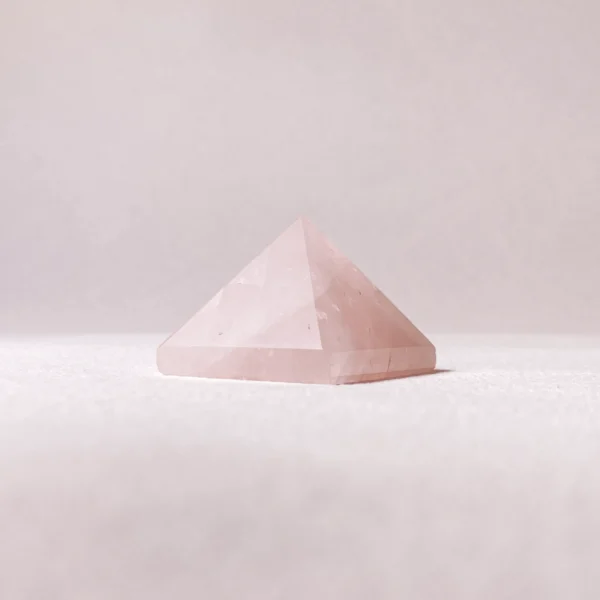
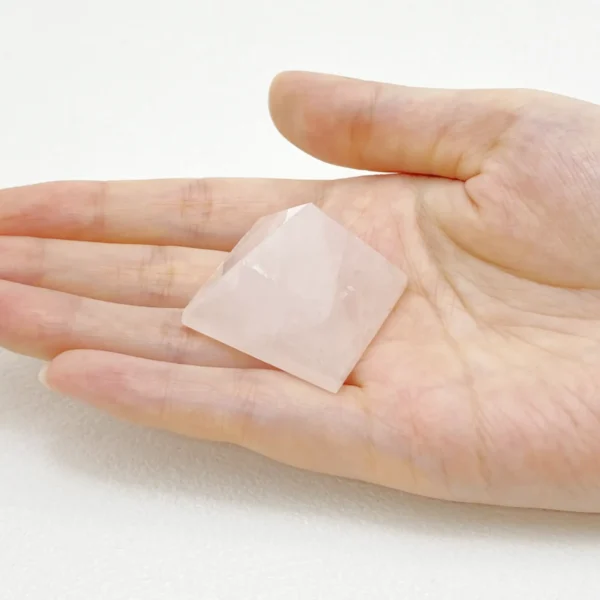
Start with rose quartz.
Grief, heartbreak, relationship difficulty, low self-worth, or any period where the emotional layer of experience needs support — rose quartz is the right starting point. Its warmth and gentleness suit the specific quality of support needed during emotional rawness, creating a holding space rather than pushing processing.
Rose quartz is also the right starting crystal for anyone whose primary goal is improving their relationship with themselves — reducing the harsh internal self-criticism that most people carry and rarely examine. Its effects here are slow and accumulative, showing up over weeks as a gradual softening rather than an immediate shift.
For the complete picture of what rose quartz does across all its applications, the Rose Quartz Complete Guide covers everything from historical context to practical daily use.

If You Want Clarity, Focus, or a Stone for Intention-Setting
Start with clear quartz.
Clear quartz is the amplifier of the crystal world — it intensifies whatever intention you bring to it, which makes it uniquely suited as a starting stone for people who want to use crystals deliberately for manifestation, goal-setting, or any kind of intentional practice.
Hold it in both hands, bring a specific, present-tense intention to mind, and carry it as an ongoing physical anchor for that intention throughout the day. The more specific and emotionally engaged the intention, the more effective clear quartz is as a vehicle for it.
Clear quartz is also the most forgiving stone in terms of care — it handles water, sunlight, and most cleansing methods without issue, which makes it one of the lowest-maintenance options for beginners still developing a cleansing routine.
If You Want Energy, Motivation, or a Creativity Boost
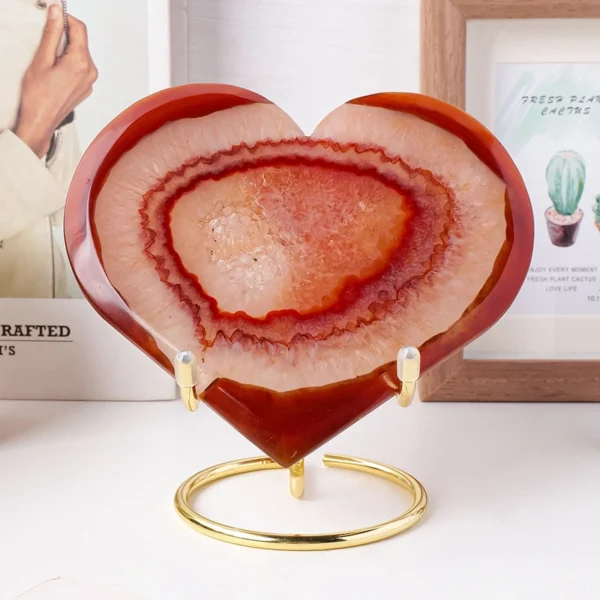
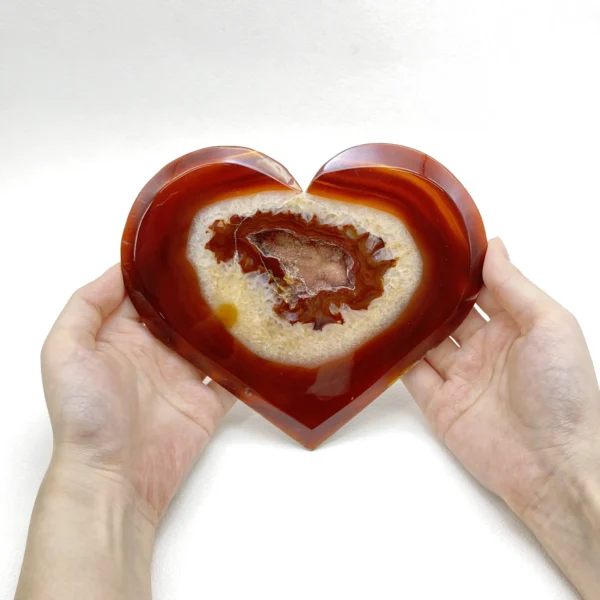
Start with carnelian.
Carnelian addresses a different layer from the other recommendations — it works on physical energy, motivation, and the courage to act rather than on mental calm or emotional processing. For people who feel creatively blocked, physically low-energy, or stuck in patterns of hesitation and overthinking, carnelian provides a warm, activating quality that the other stones here don’t replicate.
Keep it on your desk, carry it to situations requiring confidence, or place it wherever you do your most important work. Its orange-red warmth is immediately appealing to most people aesthetically, which makes it an easy stone to remember to actually use — a practical advantage for beginners still building the habit of working with crystals.
If You’re Not Sure What You Need
Start with amethyst and clear quartz together.
This is the most versatile combination for a beginner who isn’t drawn to a specific need. Amethyst provides the calming, settling quality that most people benefit from, regardless of their specific circumstances. Clear quartz amplifies that calm and adds the intention-setting capability for anything else you want to work with.
Two stones, covering the mental-emotional layer and the intention-amplification layer simultaneously — a functional starting point that works for almost anyone.
The One Thing That Matters More Than Which Stone You Choose
Stone selection matters. But what matters more is actually using the stone consistently and with clear intention rather than buying it and forgetting about it.
The most common beginner experience is purchasing a crystal, feeling enthusiastic about it for a few days, and then losing the habit. The stone ends up on a shelf with a vague sense that it should be doing something, but isn’t.
The habit that prevents this is simple: put the stone somewhere you’ll see it or touch it daily. Bedside table. Desk. Pocket. The physical reminder creates the consistency that makes any crystal effective — regardless of which one you chose.
Once you have a consistent relationship with one or two stones, deciding how to choose between crystals more broadly becomes much more intuitive because you have a felt reference point to compare new stones to.
FAQ
What crystals should a beginner get first if on a tight budget? Amethyst and black tourmaline are among the most affordable, commonly used crystals — small tumbled pieces of both are available for a few dollars each from reputable sellers. Clear quartz and carnelian are similarly accessible. Rose quartz is also budget-friendly. Selenite is slightly more expensive for meaningful pieces, but worth prioritising if home cleansing is the goal. All seven essential beginner stones are available at accessible price points.
Is one crystal enough to start with? Yes. One stone used consistently with clear intention is more effective than five stones handled inconsistently. Start with one, build a genuine relationship with it over several weeks, then add more from an informed position rather than purchasing a collection you don’t know how to use.
Can children use crystals? Larger polished pieces — spheres, towers, palm stones — are appropriate for children who are old enough not to put things in their mouths. Small tumbled stones are a swallowing risk for young children and should be kept out of reach or used only under supervision. Energetically, amethyst, rose quartz, and selenite are the gentlest choices for children’s spaces.
Are crystals suitable for men? Crystal properties aren’t gender-specific. The distinction people often feel is cultural rather than energetic — some stones carry a femininely coded aesthetic (rose quartz, pink opal) while others read as neutral or masculine (black tourmaline, obsidian, smoky quartz). But the energetic properties don’t change based on who’s holding the stone. Men use crystals for the same reasons anyone else does — stress reduction, grounding, emotional support, and intentional practice.
How long before I notice results from my first crystal? For grounding stones like black tourmaline, the effect is often noticeable within the first few days of carrying. For emotional support stones like rose quartz and amethyst, the effects are more gradual — most people notice them over two to three weeks of consistent use, often in retrospect rather than in the moment. Give any new crystal at least three weeks of genuine daily contact before deciding whether it’s working.