How do you meditate with crystals?
To meditate with crystals, choose one stone that matches your intention, sit somewhere quiet, hold the crystal or place it nearby, and focus on slow, comfortable breathing. Use the crystal as a physical reminder to return your attention to the present moment. Start with 5–10 minutes and gradually build a routine that feels natural. The crystal doesn’t need to produce a specific sensation or result—the meditation itself is the practice.
You don’t need a perfect meditation room to begin.
You don’t need a collection of twenty crystals.
And you definitely don’t need to know exactly what you’re supposed to feel.
If you’ve ever looked at crystal meditation online and thought it seemed beautiful but slightly intimidating, you’re not alone. There are endless photographs of carefully arranged stones, candles, incense, meditation cushions, and elaborate rituals. It can make something that is actually very simple feel much more complicated than it needs to be.
Learning how to meditate with crystals can be as simple as sitting somewhere quiet, holding one stone, and giving yourself five uninterrupted minutes.
That’s it.
The crystal can become an anchor for your attention—a physical object that reminds you to slow down and return to the present moment.
There isn’t reliable scientific evidence that crystals themselves produce specific healing effects during meditation. The value many people find in them is often connected to symbolism, intention, mindfulness, and the ritual of creating space for yourself.
That distinction doesn’t make the practice meaningless.
In fact, I think it makes it more personal.
You don’t need your crystal to “do” something to you. You can decide what the stone represents for you and use that meaning to support a regular meditation habit.
If you’re completely new to crystals, our broader guide to healing crystals is a useful place to start. But if your goal is simply to sit down and meditate with one today, this guide will walk you through the process from beginning to end.
What Is Crystal Meditation?
Crystal meditation is a form of meditation in which a crystal is incorporated into the practice as a physical or symbolic focus.
You might hold the crystal gently in your hand. Alternatively, place it in front of you where you can see it. It can also rest beside your meditation cushion.
Or you might simply keep it nearby while you focus on your breathing.
There isn’t one correct method.
Some crystal traditions associate particular stones with specific chakras, intentions, emotions, or spiritual qualities. For example, rose quartz is commonly associated with compassion and self-love, while amethyst is traditionally connected with calm and spiritual reflection.
These are traditional metaphysical associations rather than scientifically established properties.
For a beginner, the most important question isn’t:
“Which crystal has the strongest energy?”
Try asking:
“What do I want to give my attention to today?”
That might be calm.
Self-love.
Grounding.
Clarity.
Gratitude.
Or simply being present.
Once you have that intention, choosing a crystal becomes much easier.

How to Meditate With Crystals: 7 Simple Steps
1. Choose One Crystal
Start with one.
Seriously.
It’s tempting to put every crystal you own around your meditation space, especially if you’re new to crystals and excited about trying them. But having too many choices can make the practice feel like another task to complete.
Choose the stone that naturally feels appropriate for your intention.
For example:
Rose Quartz
For self-love, compassion, and emotional gentleness.
Amethyst
For calm, reflection, and a quieter evening practice.
Clear Quartz
Often chosen as a versatile meditation and intention-setting stone.
Smoky Quartz
Traditionally associated with grounding and stability.
Lepidolite
Often chosen for calm and emotional balance.
You don’t need to own any of these specifically.
If you already have a crystal you love, start there.
Your familiarity with the stone may actually make it a better meditation anchor than a crystal you chose simply because a list told you it was “the best.”
2. Create a Comfortable Space
Your meditation space doesn’t have to look like a wellness magazine.
A chair is fine.
The edge of your bed is fine.
A cushion on the floor works.
Even sitting at your desk for five minutes can work if that’s the only quiet place available.
What matters most is reducing unnecessary distractions.
Put your phone on silent.
Dim harsh lighting if you prefer.
Open a window if fresh air helps you settle.
Then place your crystal somewhere within reach.
You can hold it, place it on your lap, or put it on a table in front of you.
The goal isn’t to create a perfect ritual.
It’s to create a small boundary between your usual activities and this few minutes of intentional attention.
3. Set One Simple Intention
Before you close your eyes, choose one intention.
Keep it short.
For example:
I want to feel more grounded today.
Or:
I want to be gentler with myself.
Or:
I want to let my thoughts slow down.
An intention isn’t a demand.
You’re not telling yourself that you must become calm within five minutes.
You’re simply deciding what you want to bring your attention toward.
This distinction becomes particularly important when you’re having a difficult day.
Meditation isn’t about forcing uncomfortable emotions away.
It’s about noticing what is happening without immediately reacting to everything that appears.
If your intention is self-love, you could also pair your practice with some of the rose quartz affirmations for self-love from our earlier guide.
4. Begin With Your Breathing
Now hold the crystal or place it nearby.
Close your eyes if that feels comfortable.
Take a slow breath in.
Then let the breath leave naturally.
You don’t need to use an elaborate breathing technique.
Simply notice:
Inhale.
Exhale.
Begin by noticing the feeling of the air moving around you. Bring your attention to your shoulders, then soften your jaw. Finally, check whether you’re holding tension somewhere else in your body.
There’s no need to force yourself to relax.
Just notice.
If your attention wanders after three breaths, that’s completely normal.
Return to the breath.
Then return to the crystal.
That returning is the practice.
5. Use the Crystal as an Anchor
This is where how to meditate with crystals becomes slightly different from simply meditating with your eyes closed.
Instead of trying to empty your mind, give your attention somewhere gentle to return.
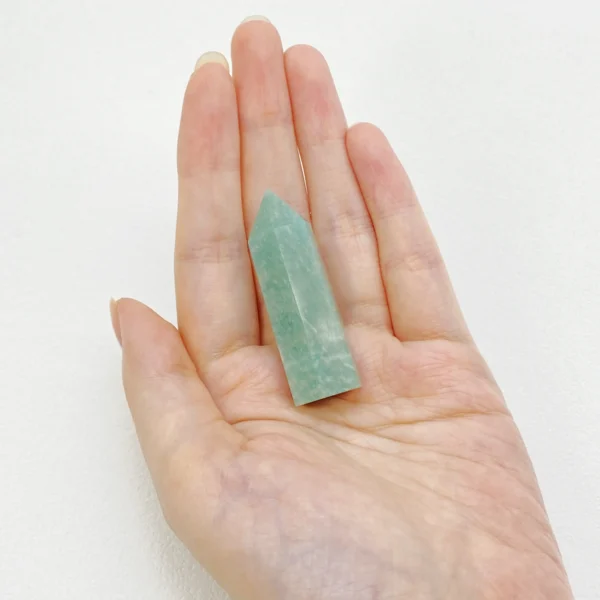
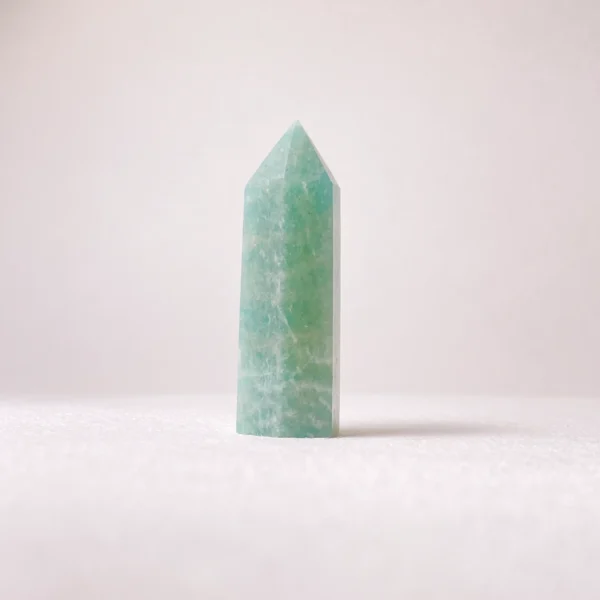
If you’re holding the crystal, notice its physical details.
Is it smooth or rough?
Cool or warm?
Heavy or light?
Does it have lines, inclusions, cloudy areas, or natural imperfections?
You don’t need to interpret every detail.
Simply observe.
If you’re using a polished palm stone, notice how its weight feels in your hand.
If you’re using a raw crystal, notice its edges and texture.
This sensory attention can make meditation easier for beginners because you have something concrete to notice when your thoughts become busy.
The crystal becomes an anchor.
Not a magic solution.
Not something you have to make yourself “feel.”
Just an object that helps bring you back.
6. Let Thoughts Come and Go
This is probably the part beginners struggle with most.
You sit down expecting your mind to become quiet.
Instead, it starts producing a complete inventory of everything you’ve ever forgotten to do.
You remember an email.
A conversation from yesterday might suddenly return to your mind. Something embarrassing from five years ago may appear next. Before you know it, you’re wondering what you’re going to have for dinner.
That’s normal.
A wandering mind doesn’t mean you’re bad at meditation.
The goal isn’t to prevent thoughts.
It’s to notice when you’ve followed one and gently return.
You might think:
“I’m thinking about work.”
Then:
“Back to the breath.”
Or:
“I’m worried about tomorrow.”
Then:
“Back to the crystal.”
No criticism required.
No frustration.
Just return.
Over time, that simple habit of noticing and returning can become more familiar.
7. End Slowly
When your meditation time is finished, don’t immediately jump back into your phone.
Take one final breath.
Notice how your body feels.
Look at the crystal in your hand or in front of you.
Then ask:
What do I want to carry with me into the rest of the day?
Perhaps it’s a sense of calm. It could be patience. Or maybe it’s simply the reminder that you don’t have to respond to everything immediately.
Open your eyes.
Move slowly.
And continue with your day.
The point isn’t to preserve a perfect meditative state.
It’s to bring a little more awareness into ordinary life.

How Long Should You Meditate With Crystals?
If you’re a beginner, start with 5–10 minutes.
That’s enough.
You don’t need to sit for thirty minutes because someone online said that longer meditation is more spiritual.
Consistency matters more than duration.
Try:
5 minutes → 10 minutes → 15 minutes
only when the practice naturally feels comfortable.
You can also create different routines.
Morning
Use a grounding crystal and set an intention for the day.
Afternoon
Take a three-minute pause when you notice yourself becoming overwhelmed.
Evening
Use a calming crystal and reflect on the day before going to bed.
There is no universal “best” time.
The best time is the one you can realistically repeat.
Which Crystals Are Best for Meditation?
There isn’t one objectively best meditation crystal.
Your choice should depend on the intention behind your practice.
| Crystal | Traditional Association | Meditation Intention |
| Clear Quartz | Clarity and intention | Focus |
| Amethyst | Calm and reflection | Quieting the mind |
| Rose Quartz | Compassion and self-love | Emotional gentleness |
| Smoky Quartz | Grounding and stability | Staying present |
| Lepidolite | Calm and balance | Emotional reflection |
| Selenite | Clarity and spiritual practice | Quiet contemplation |
These associations come from crystal traditions and metaphysical practices rather than established scientific effects.
If you’re uncertain, choose the crystal you’re naturally drawn to.
You can always change your choice later.
Should You Hold the Crystal or Place It Nearby?
Both are fine.
Hold the crystal if:
- You like tactile objects.
- You find physical sensations grounding.
- You want something concrete to focus on.
Place it nearby if:
- Holding an object feels distracting.
- You prefer traditional seated meditation.
- You want the crystal to symbolize your intention rather than become the main focus.
There is no rule saying you have to hold a crystal for the meditation to “work.”
The practice is still meditation.

A Simple 5-Minute Crystal Meditation
If you want something you can actually try today, use this routine.
Minute 1 — Arrive
Sit comfortably.
Place your feet on the floor.
Take several natural breaths.
Minute 2 — Connect
Hold your crystal.
Notice its weight, temperature, shape, and texture.
Minute 3 — Breathe
Follow your natural breathing.
When your thoughts wander, gently return.
Minute 4 — Intention
Repeat a simple phrase silently:
I am here.
Or:
I can meet this moment as it is.
Minute 5 — Close
Take one final breath.
Ask:
What do I need from myself today?
Then slowly return to your normal activities.
That’s a complete crystal meditation.
Nothing else is required.
Common Beginner Mistakes
Trying to Feel Something Special
You may not feel warmth or energy. Colors might not appear, either. Sometimes, the experience is simply sitting quietly for five minutes.
That’s okay.
Don’t judge the quality of your meditation by whether something unusual happens.
Using Too Many Crystals
More isn’t automatically better.
Start with one.
Learn what helps you focus.
Then experiment.
Expecting the Crystal to Do the Work
This is probably the most important point.
The crystal doesn’t need to make you calm.
It doesn’t need to remove every negative thought.
And it doesn’t need to solve an emotional problem.
Think of it as a reminder.
You are the one practicing.
Making Meditation Another Performance
Perfect posture isn’t necessary. A beautiful room isn’t required, either. And you certainly don’t have to meditate every day without ever missing a session.
A practice becomes sustainable when it fits your real life.

How to Make Crystal Meditation a Daily Habit
The easiest way to build a practice is to connect it with something you already do.
For example:
After making coffee → 5-minute meditation
After your morning skincare → crystal intention
Before turning off the light → evening reflection
You can also keep one crystal somewhere visible.
On your desk.
Beside your journal.
Next to your bed.
When you see it, let that become the cue.
You don’t have to meditate every time you see it.
Sometimes the reminder itself is enough.
FAQ
How do you meditate with crystals for the first time?
Choose one crystal, sit somewhere comfortable, set a simple intention, and focus on your natural breathing while holding the crystal or keeping it nearby. When your mind wanders, gently return your attention to your breath or the crystal.
How long should a beginner meditate with crystals?
Start with 5–10 minutes. There is no need to begin with a long session. A short practice that you can repeat consistently is often easier to maintain than an ambitious routine.
Which crystal is best for meditation?
There is no single best crystal. Clear quartz, amethyst, rose quartz, smoky quartz, and lepidolite are commonly used in crystal meditation for different traditional intentions. Choose based on what you want your practice to represent.
Should I hold a crystal while meditating?
You can hold one if the physical sensation helps you stay focused. You can also place it beside you. There is no requirement to hold a crystal during meditation.
Can I meditate with more than one crystal?
Yes, but beginners may find one crystal easier. Using several stones can introduce more visual and tactile stimulation, while one crystal provides a simple focal point.
Can crystal meditation replace regular meditation?
Crystal meditation is better thought of as one way of incorporating a crystal into a meditation practice. The crystal isn’t necessary for meditation, and the practice doesn’t need a crystal to be meaningful.
Conclusion
Learning how to meditate with crystals doesn’t require complicated rituals or a perfect collection of stones.
Choose one crystal.
Choose one intention.
Sit down.
Breathe.
Notice.
Return when your mind wanders.
That’s enough.
Over time, the crystal may become associated with a particular quality you want to cultivate—calm, self-compassion, grounding, clarity, or simply the ability to pause before reacting.
And perhaps that’s the most useful way to think about crystal meditation.
The stone doesn’t have to change you.
It can simply remind you to stop long enough to listen to yourself.
Start with five minutes.
Put your phone away.
Hold one crystal.
Take one slow breath.
Then begin.