I’ve been handling crystals long enough that I no longer remember which one I bought first. What I do remember is the gap between what the shop card said and what I actually noticed once I’d lived with the stone for a few weeks — and that gap is most of what this guide is about.
A proper healing crystals guide should do two things at once: tell you honestly what’s known and what isn’t, and give you something practical enough to actually use. Most guides pick one or the other. The mystical ones overstate certainty. The sceptical ones flatten everything into a placebo and move on. Neither matches what it’s actually like to work with these stones over time, sitting with them through good weeks and bad ones, noticing what holds up and what doesn’t.
This is the long version — the one I wish existed when I started. It covers what crystals are, where this practice actually comes from, how they’re thought to work, the different physical forms they come in and why that matters more than most people realise, the handful of stones worth knowing well before any others, how to match a stone to an actual problem rather than a vague aspiration, and the practical maintenance that nobody mentions until you’ve already ruined something.
What Crystals Actually Are
Strip away the spiritual language for a moment, and a crystal is just a mineral with an ordered internal structure — atoms arranged in a repeating pattern rather than randomly, the way glass or most ordinary rocks are arranged. That ordered structure is what gives crystals their geometric faces, their consistent hardness, and in many cases their piezoelectric properties — the ability to generate a small electrical charge under mechanical pressure, which is why quartz ends up in watches and oscillators and not just on windowsills.
Hardness is measured on the Mohs scale, running from 1 (talc, soft enough to crumble between your fingers) to 10 (diamond). Most of the common healing crystals sit somewhere between 2 and 7.5. That range matters practically far more than it sounds like it should — it tells you almost everything about how a stone needs to be handled, cleansed, and stored before you’ve even learned its supposed properties. Selenite has around 2 scratches if you so much as look at it wrong. Quartz varieties at 7 shrug off most ordinary handling. Knowing where a stone sits on this scale before you buy it saves a lot of disappointment later.
Most of what gets sold under the umbrella of healing crystals falls into a handful of mineral families. Quartz varieties — clear quartz, amethyst, citrine, rose quartz, smoky quartz — share the same silicon dioxide structure with different trace impurities responsible for colour. Iron does most of the work across this family: it tints amethyst purple, rose quartz pink, and citrine yellow, depending on the specific oxidation state and the conditions under which the stone formed. Tourmaline, calcite, fluorite, and selenite are each their own distinct mineral group with very different chemistry and very different care requirements, which is the part most beginners get caught out by because nothing on the label warns them.
None of this geological detail tells you whether crystals “work” in the sense most people mean when they ask. But it does tell you why some stones can go in water, and others dissolve on contact, why some fade under sunlight, and others don’t fade at all, and why two stones that look superficially similar on a shop shelf can behave completely differently once you actually live with them for a season. That practical knowledge matters more day to day than any amount of energetic theory, and it’s the part I wish someone had handed me on a single page when I started instead of making me learn it stone by stone.
A Short History of Working With Stones
This practice is older than most of the language used to describe it today, and knowing where it comes from changes how you hold the whole thing.
Ancient Egyptians used lapis lazuli, carnelian, and turquoise in burial practices and personal adornment, attributing protective and health-related qualities to specific stones centuries before anyone used the word “chakra” in this context. Roman and Greek texts describe amethyst worn to prevent intoxication — the name itself comes from the Greek amethystos, meaning “not drunk.” Chinese jade carving traditions, some of the oldest continuous lapidary practices in the world, treated jade as a stone of moral and physical cultivation rather than decoration alone, a distinction that still shapes how the stone is regarded in parts of East Asia today.
What’s now called crystal healing in its contemporary Western form is largely a twentieth-century synthesis — pulling from Hindu chakra theory, Theosophical movements of the late 1800s, Native American and other Indigenous practices (often without proper attribution, which is a real and ongoing problem worth being honest about), and the broader New Age movement that gained momentum through the 1970s and 80s. The result is a practice that draws on genuinely ancient traditions but has also been reshaped, simplified, and in places commercialised in ways those original traditions wouldn’t necessarily recognise.
I think this history matters for two reasons. First, it’s a reminder that working with stones for their perceived properties isn’t a recent invention or a passing trend — it has thousands of years of continuous human practice behind it across wildly different cultures, which at minimum suggests something durable in the impulse even if the specific mechanisms remain unproven. Second, it’s worth approaching the more recently borrowed elements — particularly anything lifted from Indigenous smudging or sweat lodge practices — with some awareness of where it actually came from, rather than treating the whole tradition as a single undifferentiated “ancient wisdom.”
How They’re Believed to Work — and What I Actually Think
I’ll be straightforward about this because most guides aren’t.
There’s no peer-reviewed research demonstrating that crystals affect health outcomes through any mechanism beyond placebo and focused attention. I’m not going to pretend otherwise, and you should be suspicious of any source that claims scientific validation it doesn’t have. Claims about crystals emitting measurable healing frequencies, balancing bioenergetic fields, or interacting with the body’s electromagnetic system in any clinically demonstrated way don’t hold up under examination, and I’d rather say that plainly than dress it up.
What I will say, after years of working with these stones regularly, is that the placebo and attention mechanisms are doing real work — and dismissing that as “just” placebo undersells how genuinely useful focused attention and ritual can be for managing anxiety, sleep, and emotional processing. A physical object that consistently anchors a specific intention becomes, through repetition, a reliable cue for that state. The nervous system responds to consistent, deliberate cues regardless of whether the object itself is doing anything beyond being present and handled with attention.
Whether something additional is happening beyond that is a question I hold with real uncertainty, and I think anyone who’s confident in either direction — full energetic mechanism, or pure placebo and nothing more — is overstating what they actually know. I’ve had experiences working with specific stones that felt meaningfully different from what I expected based on placebo alone, and I’ve also had stretches where a stone I was sure would help did nothing noticeable at all. Both of those experiences are real, and I don’t think either one settles the question.
Practically, this means I treat crystal work the way I’d treat a meditation cushion or a specific chair I always read in. The object isn’t magic. But consistent use of a specific object, tied to a specific intention, produces real behavioural and psychological effects over time. That’s enough reason to take the practice seriously, even without resolving the metaphysical question one way or the other, and it’s the framing I’d encourage anyone new to this to start from rather than either extreme.

Crystal Forms: Raw, Tumbled, Points, Clusters, and Why It Matters
The same mineral shows up in wildly different physical forms, and which one you choose changes how practical the stone is to actually use — something almost no introductory guide spends time on.
Raw crystals are unprocessed, straight from the ground with their natural facets, growth lines, and rough surfaces intact. They’re visually dramatic and a lot of people are drawn to them first, but they’re also the least practical form for daily carry or under-pillow use. The edges that make them interesting to look at are exactly what makes them uncomfortable in a pocket or under a cheek at 2 am. I keep most of my raw pieces on shelves and windowsills rather than carrying them.
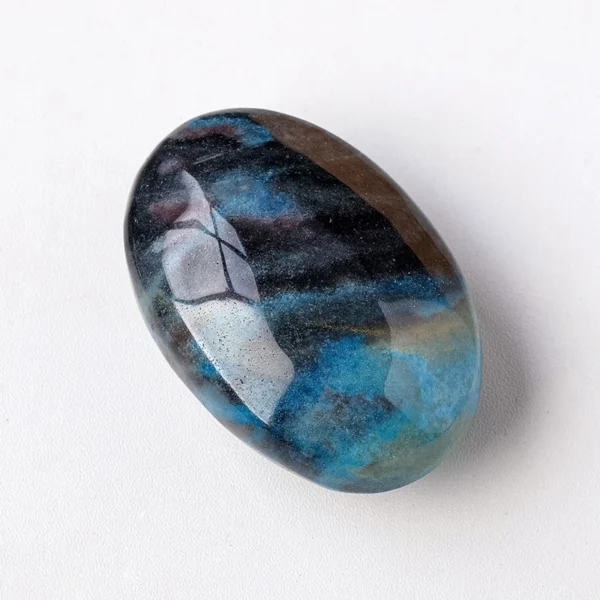
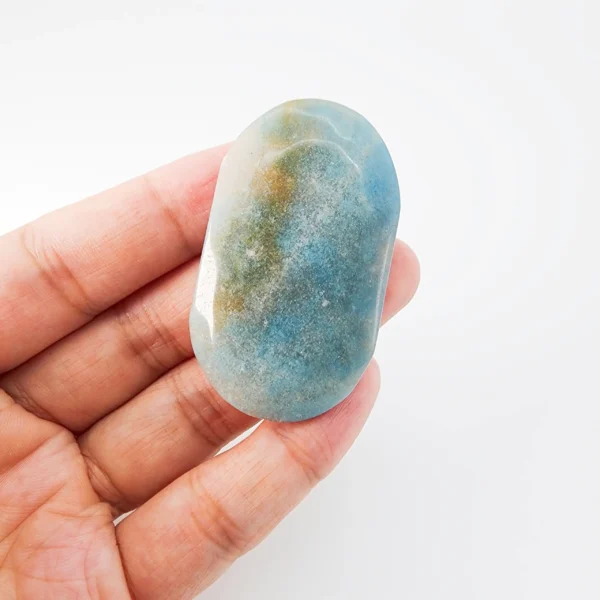
Tumbled stones have been smoothed mechanically, usually in a rotating drum with progressively finer grit, until every edge is rounded. This is the form I’d recommend for almost any practical use — pocket carry, under-pillow placement, holding during meditation. The practical differences between raw and tumbled forms matter more than most beginners expect, and the short version is that tumbled is simply more forgiving for everyday handling without sacrificing anything energetically that the tradition actually claims matters.
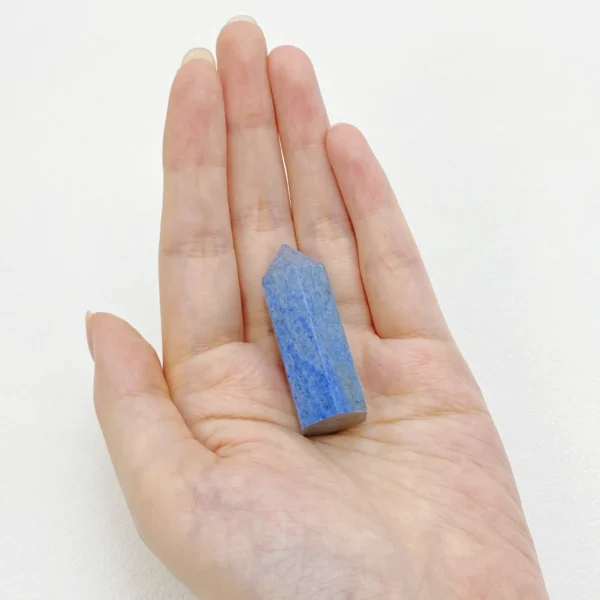
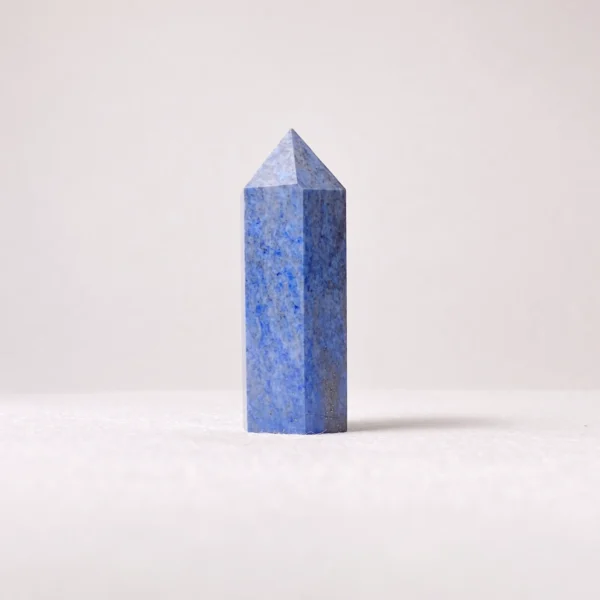
Points and wands — naturally terminated or shaped into a single directional tip — are traditionally used for directing energy somewhere specific, whether that’s toward an intention, a chakra point on the body, or outward in a grid layout. They’re less comfortable to hold for extended periods than a tumbled stone, but more useful when direction rather than ambient presence is what you’re going for.
Clusters are multiple crystal points growing from a shared base, most commonly seen in amethyst and quartz. They’re meant for room placement rather than handling, working ambiently on a space rather than on an individual through direct contact. Geodes — hollow rock formations lined internally with crystal growth — are essentially a dramatic version of the same principle, usually kept as display pieces given their size and fragility.
None of these forms is objectively “better.” The choice is almost entirely about what you’re actually going to do with the stone, and matching form to function saves a lot of frustration that otherwise gets misattributed to the stone “not working” when really it was just the wrong shape for the job.
The Chakra System, Briefly
I’ve referenced chakras a few times already without explaining the framework, and it’s worth pausing on because most crystal guides assume familiarity that a lot of readers genuinely don’t have.
The chakra system originates in Hindu and later Buddhist tantric traditions, describing seven primary energy centres running roughly along the spine from its base to the crown of the head. Each is associated with a colour, a general theme, and in the crystal healing tradition, specifically, a set of stones thought to support or balance that centre. The root chakra, at the base of the spine, governs stability, security, and physical grounding — black tourmaline’s association here is consistent and one of the more widely agreed-upon pairings across different sources. The heart chakra, centred on the chest, governs love and emotional connection, which is where rose quartz’s reputation comes from. The third eye, between the brows, governs intuition and perception, and amethyst’s calming, clarifying reputation connects to this centre.
I find the chakra framework useful as an organising structure even without taking a strong position on whether energy centres exist in any literal sense. It gives a consistent language for talking about which part of experience a stone is thought to address — mental, emotional, physical, relational — which is more useful in practice than treating every stone as a generic, undifferentiated source of vague positive energy. When I describe a stone as working on the “throat chakra” later in this guide, I mean specifically that it’s associated with communication and self-expression, not that I’m asserting anything beyond that association.
The Three Stones I’d Start With
If someone asked me to recommend exactly three crystals and nothing else, this is where I’d land — not because other stones aren’t worth knowing, but because these three cover the widest range of common needs with the least risk of getting it wrong.
Rose quartz is the one I’d never be without. Its reputation as a “love stone” undersells what it actually does, which is work on self-relationship before anything external — how you talk to yourself, how readily you extend compassion inward rather than just outward. The stone forms in pegmatite deposits and gets its colour from trace titanium, iron, or manganese, and unlike most crystal quartz, it rarely forms as distinct pointed crystals — it’s almost always massive quartz, which is part of why it tends to handle water slightly better than amethyst does. I’ve watched the effect show up slowly, in retrospect, more than in any single dramatic moment, usually as a gradual softening in how harshly I talk to myself after a mistake. For rose quartz’s full properties — formation, history, and the complete range of how to use it — that’s the place to go deeper than this overview allows.
Amethyst does the opposite job: it works on mental noise rather than emotional warmth. If your problem is a mind that won’t stop running at the end of the day, amethyst is where most people should start, and it’s forgiving enough that even inconsistent use produces something noticeable. The purple comes from iron impurities, and the same chemistry that creates that colour is also what makes the stone fade under prolonged direct sunlight — something I learned the hard way after leaving a cluster on a south-facing windowsill for most of a summer. Amethyst’s complete profile covers the mineral background and the much longer list of applications than the sleep and anxiety contexts I tend to mention most often.
Black tourmaline rounds out the set because it does something the other two don’t — grounding and protection, rather than calm or warmth. It’s a boron silicate, distinct in structure from the quartz family entirely, and its high iron content is what gives it both its colour and its specific water sensitivity. It’s the stone I notice working the fastest, which surprised me the first time I carried it through a genuinely difficult week and felt more anchored within a couple of days rather than the slow weeks-long shift I’d come to expect from amethyst or rose quartz. Black tourmaline’s protective properties in depth gets into the mineral chemistry behind that grounding effect, which is more interesting than most people expect once you understand why it behaves the way it does.
These three together cover emotional support, mental quieting, and energetic boundaries — three different layers of experience that most people need addressed at different times, sometimes within the same week.

Matching Stone to Need
The mistake I see most often, including in my own early collection, is buying crystals based on which one looks nicest rather than what it actually does. A drawer full of beautiful stones that don’t address anything specific is a common outcome of shopping by aesthetics alone, and I speak from experience on that particular drawer.
If anxiety is the issue, the right stone depends on which kind of anxiety you’re actually dealing with, because they’re not interchangeable. Mental restlessness — the racing, looping thoughts — responds well to amethyst. Emotional, fear-rooted anxiety responds better to lepidolite, which contains trace lithium within its layered mica structure and works at a different layer than amethyst entirely. Physical activation — tight chest, shallow breath, the throat closing up before you need to speak — needs blue lace agate more than either of the others. The full anxiety crystal breakdown covers matching specific symptoms to specific stones in much more detail than a general overview, as this one can manage.
If sleep is the problem, and it’s worth saying these two overlap constantly without being identical, the relevant distinction is whether the issue is in your head or in the room itself. A racing mind at bedtime needs amethyst or howlite. A bedroom that feels heavy regardless of how settled you personally feel needs selenite, which works on the energetic quality of the space rather than directly on you. Our complete sleep crystal guide walks through every common sleep complaint I’ve come across and which stone actually addresses it, rather than treating insomnia as one undifferentiated problem.
If protection or grounding is what you need — feeling scattered, energetically porous, drained by other people’s moods or by chaotic environments — black tourmaline is almost always my first recommendation, and not just because I mentioned it above. Black tourmaline’s grounding qualities come up across nearly every situation involving energetic boundaries, whether that’s a difficult workplace, a crowded commute, or simply a tendency to absorb the emotional weather of whoever’s in the room with you.
If grief or emotional recovery is where you’re focused — loss, heartbreak, the aftermath of something that’s taken a genuine toll — rose quartz remains foundational, but lepidolite and rhodonite are both worth knowing for the heavier end of emotional processing, where rose quartz’s gentleness alone sometimes isn’t quite enough weight to meet what you’re carrying.
If confidence or focus is the goal rather than calm specifically, citrine and carnelian do work that the calming stones above don’t replicate. Citrine works at the level of personal power and creative energy; carnelian provides more of an activating push for moments that require courage rather than steadiness. Neither is a substitute for the grounding or calming stones — they’re solving a different problem entirely.
If love and relationships are where you’re focused — whether that’s romantic connection, self-worth, or recovering from something painful — rose quartz remains the foundation, but it’s not the only stone worth knowing in this category. Crystals for love and relationships covers the fuller picture, including stones specifically suited to heartbreak and to building confidence in connection with others rather than romantic attraction alone.
What I’d avoid, across all of these, is choosing a stone purely because a list told you it was “the best” for something without checking whether your specific version of that problem actually matches what the stone is suited to address.
Crystals in Practice: Meditation, Grids, and Daily Use
Owning crystals and actually using them are different activities, and most of the benefit — whatever its underlying mechanism turns out to be — comes from the second one rather than the first.
Meditation is where I’d suggest starting if you’re not sure how to build any kind of practice around this. Holding a single stone, with your attention on its weight and temperature rather than on your thoughts, is a genuinely accessible entry point even for people who’ve struggled with every other form of meditation they’ve tried. The physical object gives the mind something concrete to return to whenever it inevitably wanders, which is most of what meditation actually is in practice, regardless of the specific technique. Our full meditation guide covers technique in more depth, including which hand to use and why that matters more than it might sound like it should, plus which stones suit which kind of session, depending on what you’re trying to settle or access.
Crystal grids are the more elaborate version of the same underlying principle — multiple stones arranged with intention, often in geometric patterns, to create a combined field rather than relying on a single stone’s isolated effect. I was sceptical of grids for longer than I was sceptical of almost anything else in this practice, mostly because the sacred geometry language surrounding them felt like unnecessary decoration layered on top of something simpler. What changed my mind, eventually, was simpler than the theory suggests: a deliberate, considered arrangement of several complementary stones does seem to produce something more sustained than the same stones scattered randomly around a room without any thought given to their relationship to each other. Setting up your first crystal grid covers the practical version of this without requiring you to buy into more theory than you’re comfortable with.
For daily use beyond these two more deliberate practices, the simplest version is just carrying a stone and engaging with it briefly during moments that actually matter — a difficult meeting, a hard conversation, the transition into sleep at the end of a long day. Consistency does more here than intensity ever does. A stone touched for ten seconds every single day reliably outperforms one held for an hour once a month and then forgotten in a drawer until the next crisis reminds you it exists.
Worn jewellery is worth a separate mention because it solves the consistency problem almost automatically. A pendant or bracelet you put on each morning keeps the stone in your energy field without requiring you to remember a separate ritual, which matters more than people expect once the novelty of a new crystal wears off after the first couple of weeks.

Keeping Them Clean
This is the part nobody tells you about until you’ve already ruined something, so let me say it directly: not every cleansing method works for every stone, and the wrong combination causes damage that doesn’t reverse, no matter how much you’d like it to.
Selenite dissolves in water — not eventually, but with surprising speed if you’re not paying attention. Malachite can leach copper into water that shouldn’t then touch your skin or be anywhere near your mouth. Black tourmaline’s iron content makes it vulnerable to oxidation with repeated moisture exposure, producing a dull, rust-tinged surface over time. Amethyst and rose quartz both fade — slowly, permanently, with no way back — under sustained direct sunlight, which is a lesson I’ve already mentioned, learning the hard way, and one I’d rather you skip.
None of this is mentioned on most retail packaging, which is part of why I think a proper guide needs to cover it directly rather than assuming you’ll figure it out through trial and error on stones you actually care about.
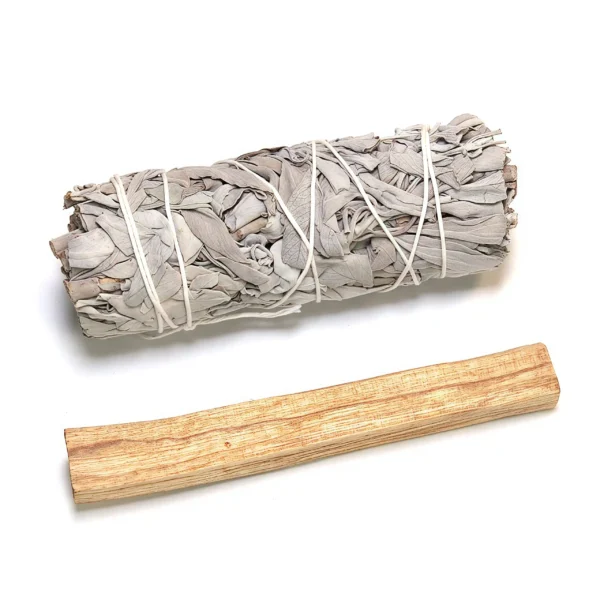
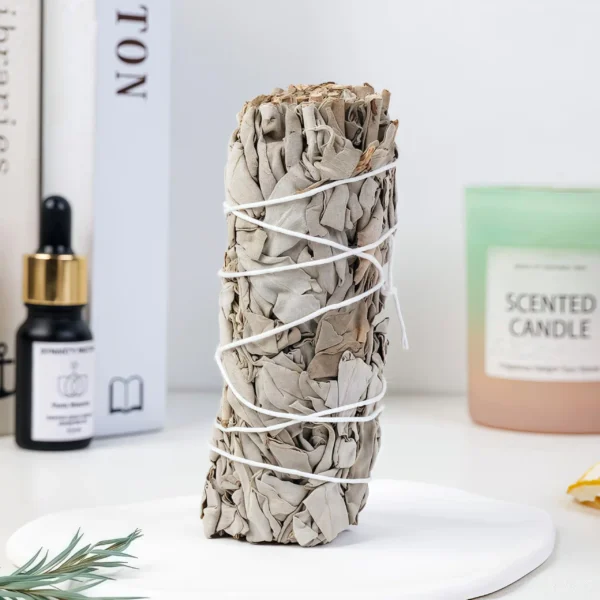
The methods that work for everything, without exception and without risk, are smoke cleansing and moonlight. If you’re ever unsure whether a specific stone tolerates water or salt, default to one of those two, and you genuinely won’t go wrong regardless of what the stone turns out to be made of. Seven cleansing methods are explained in full, breaking down which method suits which stone in proper detail, including the specific care notes that matter most for the crystals people actually buy and use most often, rather than the rarer specimens that show up in collector circles.
How often you need to cleanse depends almost entirely on use. Stones in daily carry, especially anything used through anxious or emotionally heavy stretches, need attention every couple of weeks at a minimum. Stones sitting quietly on a shelf, doing their ambient work without much direct handling, can go a month or more between cleansing without any real consequence that I’ve ever noticed.
If You’re Just Starting Out
I get asked fairly often what to buy first, and my answer has stayed consistent for years now: fewer stones than you think you need, chosen for what they actually address rather than how they look on a shelf, and given enough time before you judge whether they’re doing anything at all.
Two or three stones, genuinely used with some consistency, outperform a shelf of fifteen that mostly just sit there looking nice. Amethyst, rose quartz, and black tourmaline — the three I mentioned earlier — cover enough ground that most beginners don’t need to look much further for the first several months of working with this practice. The seven essential beginner stones go through a slightly wider starting set if you want more options to choose from, along with the practical reasoning for why those particular seven made the cut over the dozens of other commonly available stones that didn’t.
What I’d specifically avoid as a first purchase: anything described in marketing language as intensely powerful, transformative, or rare. The stones with the most dramatic language attached to them tend to be the ones beginners find overwhelming rather than genuinely useful, partly because the expectations set by that language are almost impossible for any object to actually meet. Start gently. You can always add intensity later, once you’ve developed enough of a felt sense for how these stones affect you specifically, to know what you’re actually looking for.
A Note on Sourcing and Quality
Worth addressing directly because it affects everything written above: a meaningful portion of what’s sold under the healing crystals label online is dyed glass, synthetic material sold without proper disclosure, or genuine stones mislabelled as something more desirable than what they actually are. This isn’t a niche concern confined to obscure sellers — it’s common enough across major marketplaces that learning basic authentication is genuinely useful for anyone planning to build a collection of any real size.
The practical checks are simple enough to do at home for the most common stones. Temperature is the fastest: genuine quartz varieties stay noticeably cooler in your closed hand for longer than glass does, because of the difference in thermal conductivity between the two materials. Inclusions are the second check — natural stones almost always carry some imperfection, some variation in colour or clarity, and a perfectly uniform, flawless piece at a suspiciously low price is a warning sign rather than the quality indicator it’s often mistaken for. Price relative to size is the third: extremely low prices for substantial, visually impressive pieces usually mean something’s been substituted somewhere in the supply chain, whether that’s glass, dye, or an entirely different and cheaper mineral sold under a more popular name.
None of this should make you paranoid about every single purchase you make. Most common crystals, tumbled stones especially, are inexpensive enough that even a disappointing purchase isn’t a significant loss in any practical sense. But it’s worth knowing the basics before spending meaningfully on anything larger, rarer, or more specific than the common tumbled stones most people start with, where the financial stakes of getting it wrong are considerably higher.
What I’d Tell Someone Starting From Zero
If you’ve read this far and you’re still uncertain whether any of this is genuinely worth your time, here’s the honest framing I keep coming back to whenever someone asks me directly.
Crystals are inexpensive, low-risk objects that give you a consistent, physical anchor for intentions you’re probably already trying to work on in some form — calm, sleep, confidence, emotional processing through a hard stretch. Whether the underlying mechanism is fully energetic, fully psychological, or some combination that neither of us can currently prove one way or the other, the practical outcome for a lot of people, myself included, is genuinely useful in day-to-day life. That’s a reasonable enough basis for trying it, even without resolving every question this guide has deliberately left open rather than papering over with false certainty.
Start with one stone. Use it consistently for three weeks before drawing any conclusions either way. Notice what you actually notice, without forcing a verdict in either direction before you’ve given it a fair chance. That approach has been more useful to me, over years of doing this, than reading any number of guides claiming to have it all figured out — including, probably, parts of this one.
FAQ
What is the best healing crystals guide for beginners?
A genuinely useful healing crystals guide should cover both the practical mineral facts — hardness, water and sunlight sensitivity, authentic versus synthetic material — and the honest uncertainty around mechanism, not just a list of properties presented as established fact. This guide aims to do both, with deeper dedicated guides linked throughout for each specific topic covered.
Do healing crystals actually work?
There’s no scientific evidence for an energetic mechanism beyond placebo and focused attention, and it’s worth saying that plainly rather than dancing around it. What’s also true is that the placebo and attention effects are genuinely useful in their own right — consistent engagement with a physical object tied to a specific intention produces real psychological benefits for many people, regardless of how the underlying mechanism is eventually understood or proven.
Which crystal should I buy first?
Amethyst, rose quartz, or black tourmaline, depending on what you’re actually trying to address — mental calm, emotional warmth, or grounding and protection, respectively. Most beginners do well starting with whichever of the three most directly matches their current situation, then adding the others once they’ve developed a sense of how the first one affects them.
How many crystals do I actually need to start a collection?
Fewer than most retail bundles suggest. Two or three stones, used consistently and with clear intention, produce more noticeable benefit than a larger collection that mostly sits unused on a shelf. Expand gradually as you develop a felt sense of what each individual stone actually contributes to you specifically.
Are expensive crystals more effective than cheap ones?
No, not energetically. Price generally reflects rarity, size, and visual quality rather than effectiveness in any practical sense. A small, inexpensive, genuine tumbled stone works the same way a large, expensive specimen of the same mineral does. The only thing worth paying more for is verified authenticity on stones that are commonly faked or substituted.
How do I know if a crystal is genuine?
Check for natural inclusions and slight colour variation rather than perfect uniform clarity, test temperature retention against glass for quartz varieties specifically, and be sceptical of unusually low prices for substantial, visually flawless pieces that look too good for the price. For specific stones, dedicated authentication guides cover the detailed tests worth knowing before you spend anything meaningful.