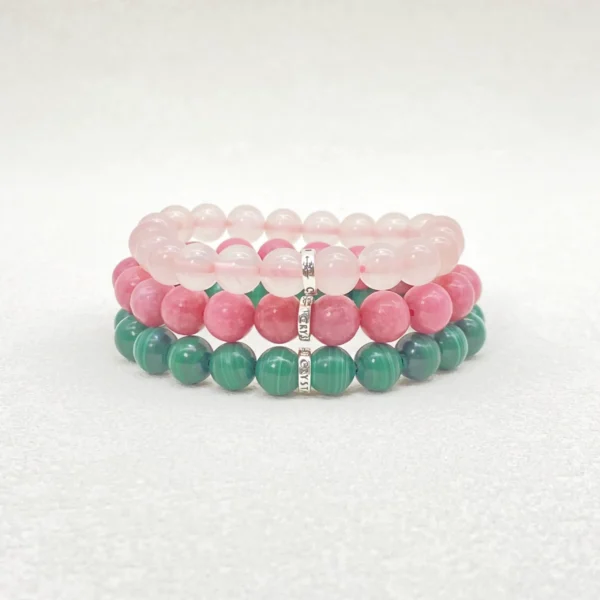
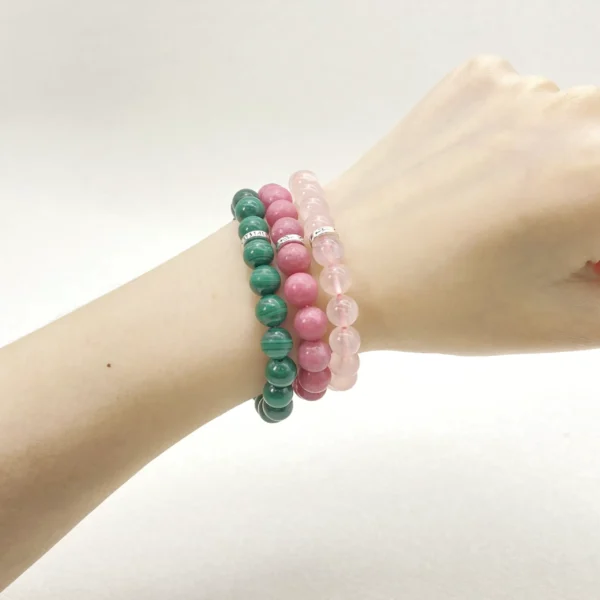
Real rose quartz is cool to the touch, contains natural inclusions and slight color variation, and stays cold longer than glass when held in your hand. Fake versions — dyed glass, synthetic copies, and dyed howlite — tend to be uniformly colored, warm up quickly, and often contain tiny air bubbles visible under magnification.
Rose quartz is one of the most commonly faked crystals at the lower price end of the market. The good news is that most fakes are identifiable without any specialist equipment. These seven tests use things you already have at home. Understanding what genuine rose quartz actually does and why it’s worth the effort of checking is covered in what genuine rose quartz actually does — but first, here’s how to verify what you have.
Why Fakes Are So Common
Rose quartz is in high demand and the genuine material is relatively inexpensive — which creates an odd market dynamic. Cheap genuine rose quartz exists, but cheap dyed glass and synthetic pink stone is even cheaper to produce, and the visual difference at a glance is minimal enough that many buyers never question what they’ve received.
The most common substitutes sold as rose quartz are dyed glass, dyed howlite, pink calcite, synthetic quartz, and — more often than most people realise — genuine pink stones that simply aren’t rose quartz. Pink opal is one of the most common substitutes, sold either accidentally by uninformed sellers or deliberately by dishonest ones. It’s a real crystal with its own properties, but it isn’t rose quartz, and the two work differently.
The 7 Tests
Test 1: The Temperature Test
This is the most reliable at-home test and the one to start with.
Hold the stone in your closed hand for 30 seconds, then open your hand and notice how quickly it warms. Genuine quartz — including rose quartz — has low thermal conductivity. It stays noticeably cool even after extended hand contact, and it takes longer to reach your body temperature than glass does.
Glass warms up quickly. If the stone feels warm within 20–30 seconds of palm contact, that’s a flag worth investigating further.
Raw rose quartz shows this effect more clearly than polished pieces, simply because the surface area in contact with your hand is less consistent. For polished tumbled pieces, a flat glass surface held against the back of your hand for comparison can help you calibrate what “quick warming” actually feels like.
Test 2: Look for Natural Inclusions
Real rose quartz is almost never perfectly uniform. Look at the stone in good light — natural daylight or a bright lamp — and look for:
Slight color variation from one area to another. Faint white streaks or wisps running through the pink. Small fracture lines or natural imperfections within the body of the stone. A slightly hazy or milky quality in some areas.
Dyed glass is typically even in color throughout, clear without internal variation, and smooth in a way that natural stone isn’t. Perfectly uniform color and perfect clarity in a pink stone at a low price point is a warning sign rather than a quality indicator.
Test 3: Check for Air Bubbles
Glass imitations often contain tiny air bubbles trapped during manufacture. These are visible under a magnifying glass or a phone camera in macro mode.
Hold the stone up to a light source and use magnification to look through the body of the stone. Bubbles in glass appear as small, perfectly spherical voids — round and regular in shape. Natural mineral inclusions in real rose quartz have irregular shapes and don’t look like bubbles.
If you see round bubbles, the stone is glass. This test alone rules out most glass imitations quickly.
Test 4: The Hardness Check
Rose quartz sits at 7 on the Mohs hardness scale. Glass sits at around 5.5. This means genuine rose quartz can scratch glass, but glass cannot scratch rose quartz.
Find a piece of ordinary glass — an old bottle bottom works well — and try to draw a line across the surface with the edge or point of the stone. Apply moderate pressure. If the stone scratches the glass clearly, that’s consistent with genuine quartz. If the stone itself shows a scratch mark but the glass doesn’t, the stone is likely glass or a softer mineral.
Be aware that this test has limits. Some substitutes like synthetic quartz are manufactured to the same hardness and will pass this test. Use it alongside the other checks rather than in isolation.
Test 5: Look at the Color Distribution
Natural rose quartz gets its color from mineral impurities distributed unevenly through the stone during formation. This creates color that fades and intensifies in different areas, with some zones pinker than others.
Dyed stones — including dyed howlite sold as rose quartz — often show color concentrated along surface cracks and grain boundaries, where dye pools during the dyeing process. If you look at the stone closely and notice the most intense pink is in the cracks and fissures while the main body of the stone is lighter, dyeing is likely.
Howlite itself has a distinctive grey veining pattern that’s sometimes visible even through dye. If you can see grey or white vein patterns running through the pink, the stone may be dyed howlite rather than rose quartz.
Test 6: Weight and Density
Genuine rose quartz has a specific gravity of around 2.65. Glass has a similar density, so this test is less definitive — but it’s useful for spotting plastic imitations, which are noticeably lighter than they should be.
Pick up the stone and assess its weight relative to its size. A genuine rose quartz of meaningful size should feel substantial — denser than you might expect from its visual volume. If a stone feels hollow or light for its size, plastic or resin imitation is possible.
Test 7: Price and Provenance
This isn’t a physical test but it’s worth including. Genuine rose quartz at small to medium sizes — tumbled stones, small raw pieces — is inexpensive. A bag of ten tumbled pieces for a few dollars is not inherently suspicious for rose quartz the way it would be for rarer stones.
Where price becomes a red flag is at the higher end: unusually deep, perfectly saturated pink color at budget prices, or large polished spheres and towers with no surface variation at mass-market prices. These often indicate either heat-treated material, dyed stone, or synthetic quartz manufactured to look like premium natural material.
What Gets Sold as Rose Quartz
Understanding the substitutes makes identification easier:
Dyed glass: The most common cheap substitute. Fails the temperature test quickly, often contains bubbles, and has perfectly even color. Usually sold at very low price points.
Dyed howlite: White howlite dyed pink. Shows color concentrated in surface cracks, may show grey veining, fails the hardness test if tested against real quartz. Softer than rose quartz at 3.5 Mohs.
Pink calcite: A genuine mineral, sometimes sold as rose quartz. Softer at 3 Mohs, reacts with acid (vinegar will cause fizzing), and has a different visual quality — often more translucent and even in color than rose quartz.
Synthetic quartz: Manufactured to the same mineral composition as natural quartz. Passes most at-home tests. The main indicator is perfect color and clarity without any natural inclusions — real rose quartz at this quality level would be extremely rare and priced accordingly. For the full picture on how natural and synthetic crystals differ and how to approach the distinction, our natural vs synthetic guide covers the complete topic.
Pink opal: A genuine crystal with its own properties, but frequently mislabelled. Has a softer, more chalky finish than rose quartz, lighter weight, and a more opaque quality. Pink opal is one of the most common substitutes at mid-range price points — the full comparison covers how to tell them apart visually.
If you’re shopping online rather than in person, buying rose quartz online carries specific risks that aren’t as obvious in physical shops — knowing what to watch for before you order saves the frustration of returns.
Does Form Affect Authenticity?
Raw and polished rose quartz both require the same authenticity checks — form doesn’t change what to look for. Raw and tumbled forms both require the same checks, though raw pieces make the temperature test and inclusion inspection easier because the natural surface and internal structure are more visible without polishing.
Large polished spheres and towers require more scrutiny than small tumbled pieces, simply because the investment is larger and the manufacturing effort to fake convincingly is worthwhile at higher price points.
FAQ
Can dyed rose quartz still work for healing? This depends on your perspective. From a mineral standpoint, dyed glass isn’t rose quartz at all — it lacks the silicon dioxide structure and iron-based color properties of genuine stone. Dyed howlite and pink calcite are real minerals with their own properties, just not rose quartz’s. Most practitioners prefer to work with what they believe they have, so authenticity matters for intention-setting even if you hold a more flexible view of how crystal energy works.
Is heat-treated rose quartz real? Heat treatment is sometimes used to intensify or alter color in quartz. Heat-treated rose quartz is still genuine quartz — the mineral composition is unchanged — but the color has been artificially enhanced. This is worth knowing if deep, unusually saturated color at a modest price attracted you to a piece.
Can a jeweller or gemologist test rose quartz? Yes. A gemologist can confirm rose quartz identity using a refractometer, specific gravity testing, and microscopic examination. This level of testing is worthwhile for expensive pieces — large spheres, jewellery with significant stones, or collection-quality specimens.
Does real rose quartz glow under UV light? Some rose quartz fluoresces faintly under UV light, but this isn’t a reliable test — both genuine and fake stones can fluoresce or not depending on their specific composition. Don’t rely on UV testing as a primary check.
Why does my rose quartz look different from others I’ve seen? Natural rose quartz varies considerably — from pale blush that’s almost white to a deep, saturated pink, from nearly transparent to quite opaque. This variation is normal and not a sign of inauthenticity. Stones from different geological sources look meaningfully different from each other.