Most guides tell you what crystals help with anxiety. Fewer tell you how to actually use them — specifically enough to do something with the information.
That’s what this guide is for. Five methods, each with concrete steps. Some take ten seconds, some take ten minutes. None require experience, ritual knowledge, or anything you don’t already have. If you’re still figuring out which crystals work best for your anxiety type, start there first. If you have your stones and want to know what to do with them, start here.
Why Method Matters as Much as Stone Selection
Buying a crystal and putting it on a shelf produces almost no benefit. The stone isn’t defective — the engagement is missing.
Crystal work requires some form of deliberate contact, whether that’s physical (carrying, holding), intentional (using it as an anchor for a specific practice), or environmental (placement that creates ongoing exposure). The method determines how the stone’s qualities interface with your nervous system. A grounding stone sitting across the room isn’t grounding you. The same stone in your hand while you take three slow breaths is.
Which method suits you depends partly on your anxiety type and partly on your daily life. Someone who works at a desk all day has different options than someone who’s on their feet and in transit. A person whose anxiety peaks in the evening needs different methods than someone whose anxiety is highest first thing in the morning.
Method 1: Daily Carry
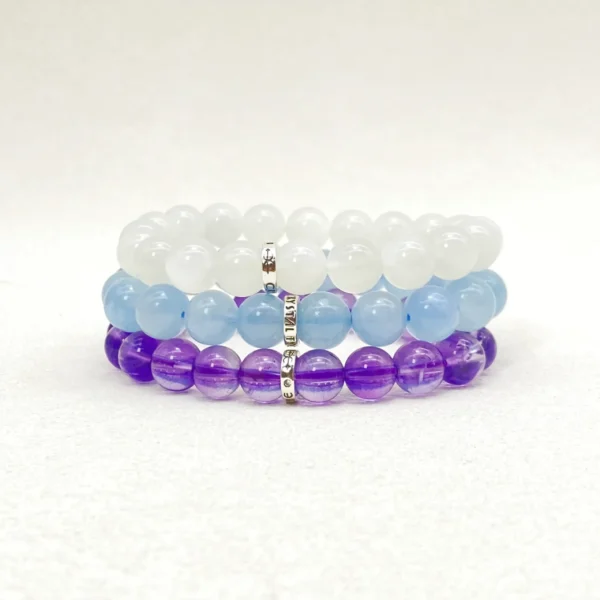
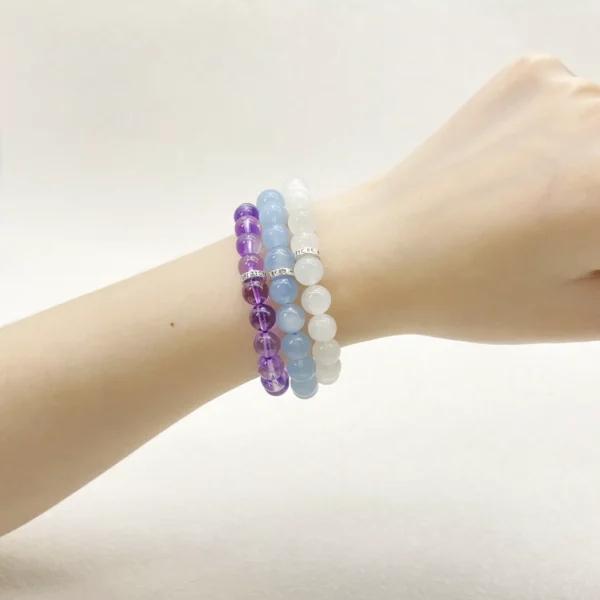
The simplest and most sustainable approach. A tumbled stone in your pocket, bag, or worn as jewellery — in consistent contact with your energy field throughout the day.
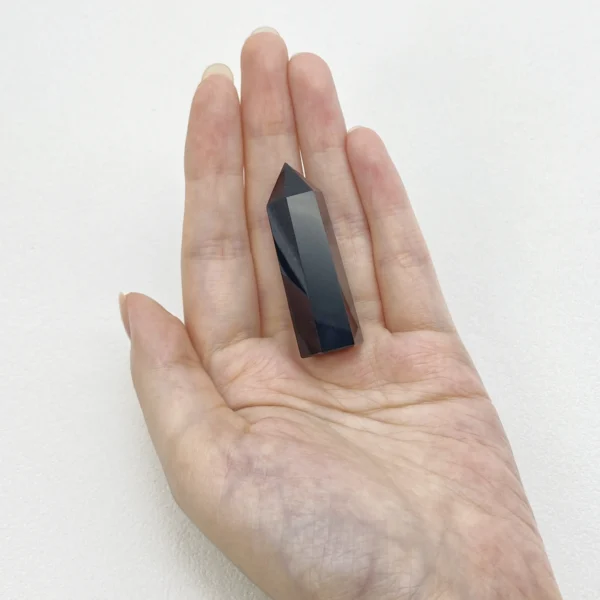
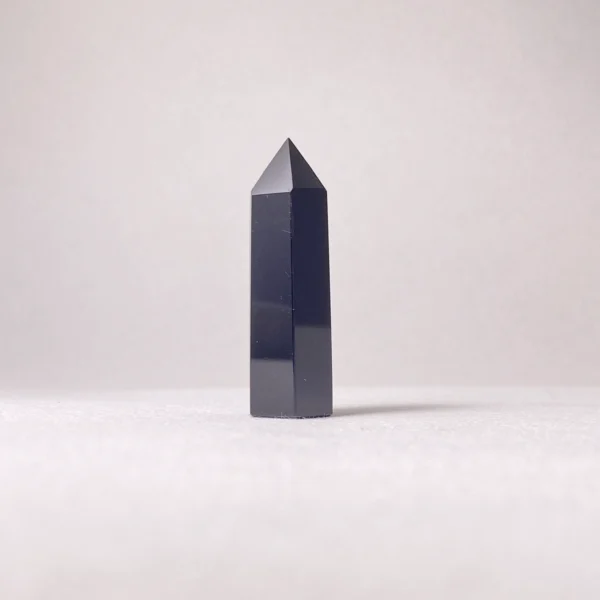
How to do it: Choose one or two anxiety stones — amethyst and black tourmaline is a reliable starting pair. Put them in your pocket or bag before you leave the house. That’s the baseline. The active version adds one habit: take the stone out at moments of activation — when the anxiety rises, when breathing shortens, when the stress response kicks in — hold it for 30 to 60 seconds, and notice what you notice.
You don’t have to do anything complicated. Hold it. Breathe. Notice the weight and temperature. That brief window of somatic attention is the mechanism — it interrupts the forward spiral of anxious thought by pulling attention into the present, physical moment.
Over days and weeks of consistent carry, the stone begins to function as a conditioned anchor. Your nervous system learns to associate it with the deliberate pause, which means even reaching for it produces some of the calming response before you’ve done anything with it. This is why consistency matters more than frequency — ten seconds every day beats twenty minutes once a week.

Method 2: Breathwork with Crystal Contact
This is the method that produces the most noticeable immediate effect and is most useful during active anxiety episodes.
How to do it: Sit or stand somewhere you can take a few moments. Hold your anxiety stone in your non-dominant hand — the receiving hand. For a full explanation of which hand to use when holding crystals and why it matters, that guide covers the reasoning. The short version: left hand for most people, non-dominant hand if you’re left-handed.
Close your eyes if the environment allows. Take a slow inhale through your nose — four counts if you can — and a longer exhale through your mouth, letting it last six to eight counts. As you exhale, direct your attention to the stone: its temperature, its weight, the specific texture of its surface.
Do this three times. Just three.
That’s the protocol. It’s short because it needs to be usable in the middle of a real day. Three slow breaths with attention on a physical object is enough to engage the parasympathetic response and begin bringing the nervous system out of activation.
A note on timing: this works best at the onset of anxiety rather than at peak activation. The earlier you catch the rising feeling and use this method, the less work it has to do. Most people who use this consistently find the window before full activation is earlier than they thought once they start paying attention to the buildup.

Method 3: Intentional Placement
Rather than carrying or actively using stones, placement works continuously in the background — ambient support that requires no deliberate practice.
Bedside placement for sleep anxiety: Amethyst on the bedside table, howlite under the pillow, selenite on the windowsill. These create an environment that supports the specific difficulty of a mind that won’t settle at night. The stones aren’t doing anything dramatic. They’re simply creating a consistent, energetic quality in the space where you’re trying to rest.
The key to effective placement is deliberateness. Dropping a crystal somewhere and forgetting about it produces less benefit than placing it consciously with a clear intention for what you want it to contribute in that space. Take ten seconds when you place a stone: hold it briefly, state the intention — “this stone supports calm and rest in this space” — and put it down. That small act of intention-setting makes the placement active rather than passive.
Workspace placement for daytime anxiety: Amethyst on the desk, citrine nearby for energy and confidence, blue lace agate if communication is part of the anxiety. Keep them within sight rather than hidden in a drawer. The visual reminder — seeing the stone when you look up from work — is part of how placement works. It cues the association with the intention you’ve set.
Method 4: Body Placement During Rest
Different from carried stones, this method involves placing crystals directly on the body during periods of intentional rest — lying down, meditating, or the quiet time before sleep.
How to do it: Lie down comfortably. Place your anxiety stone on your chest, at the centre of your sternum. For blue lace agate, directly on the throat works more specifically. For lepidolite, anywhere near the heart or upper abdomen. Hold it there with one hand if it won’t stay in place on its own.
Close your eyes and focus on the physical sensation of the stone’s weight. It’s slight, but noticeable. That slight weight — combined with its temperature and texture — gives the nervous system a clear physical reference point to attend to rather than anxious thoughts.
Five to fifteen minutes. That’s the effective window for most people. Less feels incomplete. More can produce its own restlessness.
This method is particularly useful for anxiety that feels like physical pressure — the weight that sits in the chest, the tension that doesn’t release through cognitive approaches. It addresses the body directly rather than working through the mind.

Method 5: Post-Anxiety Reset
What you do after an anxiety episode is as important as what you do during one. Most people ignore this window.
An anxiety episode — particularly a significant one — leaves a residue. The nervous system has been in a state of activation; the body is carrying the physical aftereffects; the stones that were present have absorbed the accumulated energy of the experience.
The reset practice:
First, if you were holding a stone during the episode, spend a few minutes sitting quietly with it before putting it away. Not reviewing what happened. Not worrying about what it means. Just sitting, breathing, and letting the immediate aftermath settle.
Then cleanse the stones before using them again. Cleansing your anxiety stones after use is a short process — a quick smoke pass takes two minutes —, but it matters for effectiveness over time. Stones used during acute anxiety absorb significant energy and work less effectively if not cleared between uses.
Finally, take one deliberate breath and set the intention for the next encounter with whatever triggered the episode. Not a promise to yourself about how you’ll feel — you can’t control that — but a specific intention for how you want to respond. “The next time this happens, I pause before reacting.” Something small and achievable.
This three-step reset — rest, cleanse, intend — takes under fifteen minutes and closes the loop rather than leaving the episode as unfinished energy.
Building a Complete Practice
The five methods above aren’t mutually exclusive. A complete daily anxiety practice uses them in combination:
Daily carry as the baseline — always present, minimal effort. Breathwork with crystal contact at moments of activation throughout the day. Intentional placement in the bedroom overnight and on the desk during work. Body placement during any deliberate rest period. Post-episode reset after significant anxiety events.
This doesn’t require a large collection. Three or four stones cover all five methods comfortably — amethyst, black tourmaline, blue lace agate, and selenite, between them address the full range of anxiety dimensions and are each suited to different methods in the practice.
When Methods Aren’t Enough
There are moments when anxiety is too acute for any method to work effectively. Crystals create a pattern interrupt and a somatic anchor — they’re most useful for anxiety in the mild to moderate range, or as preventive maintenance that reduces the frequency of severe episodes.
If you’re regularly experiencing acute panic rather than manageable anxiety, what to do when anxiety becomes acute panic covers specific approaches for those moments. And if anxiety is significantly affecting your daily functioning, crystals work best as one layer in a broader approach — alongside professional support, not instead of it. That isn’t a caveat to dismiss. It’s worth saying clearly.
FAQ
How often should I use crystals for anxiety? Daily carry requires no deliberate frequency — it’s continuous. Breathwork with crystal contact is most useful at the onset of anxiety, which means as often as that happens. Body placement during rest once a day is appropriate for significant or chronic anxiety. Post-episode reset happens after episodes as needed. The more consistent the baseline practice, the less acute management you tend to need over time.
Can I use these methods at work without drawing attention? Yes. Daily carry is completely inconspicuous. The breathwork method — taking three slow breaths while holding a stone in your hand — looks indistinguishable from a moment of collecting yourself, which is exactly what it is. Body placement is the only method that requires a private setting. Desk placement is visible but unusual enough that most colleagues will either not notice or simply find it aesthetically interesting.
Which method is best for someone just starting out? Daily carry first. It requires no practice, no scheduled time, and no visible activity. Set your stone on your phone or keys so you remember to put it in your pocket every morning. Do that consistently for two weeks before adding any other method. Building one habit before adding complexity produces better results than trying to establish all five at once.
Do I need to know how to meditate to use these methods? No. None of the five methods requires meditation experience. The breathwork method uses three slow breaths — that’s it. Body placement involves lying down and paying attention to physical sensations. These are accessible to anyone regardless of mindfulness or meditation background.
How do I know if the methods are working? Look for changes over two to four weeks rather than day to day. The signals worth paying attention to: anxiety episodes that feel shorter than they used to, a slightly lower baseline level of background tension, moments where you catch the anxiety earlier in its build and have more capacity to respond before it escalates. None of these is dramatic. All of them are meaningful.