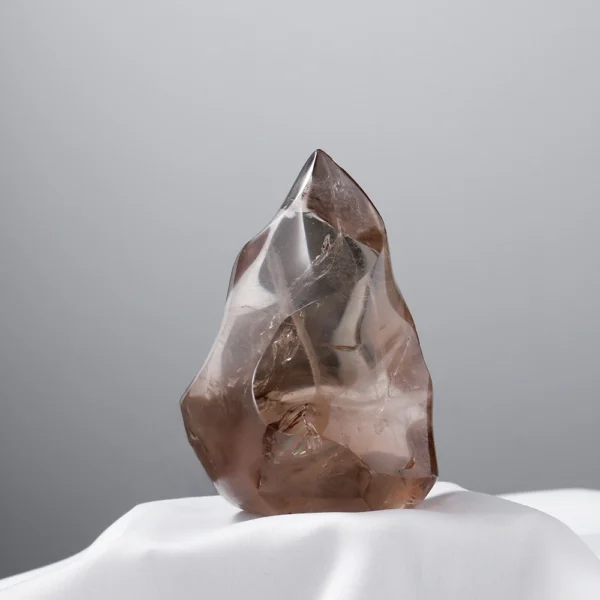
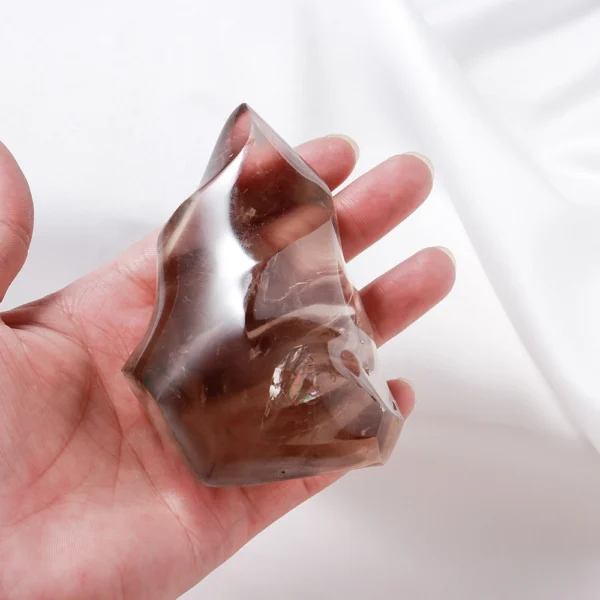
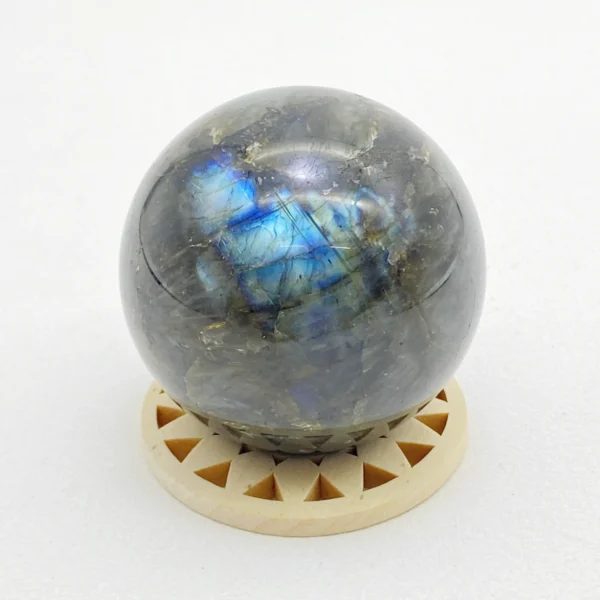
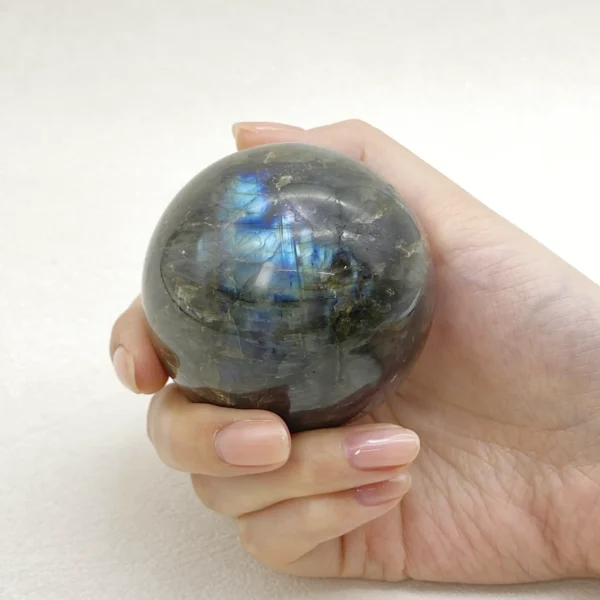
A crystal is calling to you when your attention returns to it repeatedly — not just once, but across multiple exposures, in different contexts, without a deliberate reason. You pick it up in a shop and feel reluctant to put it down. You see it mentioned several times in a week and register each instance. A friend shows you theirs, and something shifts in how you feel. These aren’t coincidences you’ve manufactured. They’re a consistent signal from somewhere below conscious decision-making.
Understanding what that signal actually is — and how to work with it rather than dismiss or over-romanticise it — is what this guide covers. If you’re earlier in the process and haven’t yet narrowed down which crystals might be relevant to you, the seven essential beginner crystals are a good starting point before applying any intuitive selection approach.
What “Calling” Actually Means
The language of crystals “calling” to people is poetic, and like most poetic language, it points at something real without being a literal description.
What’s actually happening when a crystal draws your attention consistently is more interesting than mysticism and more complex than coincidence. The human attention system is selective — we notice what our subconscious has flagged as relevant. When you’re in a state of anxiety, you notice things related to calm. When you’re processing grief, you notice things that resonate with loss or healing. When you need grounding, your nervous system is looking for anchors.
Crystals carry consistent energetic and symbolic associations within the traditions that work with them. When your subconscious keeps flagging a particular stone — returning your attention to it across multiple contexts — it’s often because something in you has registered that this stone’s associations match what you’re currently working with, even if your conscious mind hasn’t articulated the need yet.
This doesn’t require a belief in crystal energy to be useful. Whether the mechanism is energetic resonance or attentional filtering shaped by symbolic association, the practical result is the same: consistent draw toward a specific stone is reliable information worth paying attention to.

The Signals Worth Trusting
Not every flicker of interest in a crystal is a meaningful signal. These are the ones that are:
Repeated attention across different contexts. Seeing the same crystal mentioned in three unrelated places in a week, or picking up the same stone every time you visit a shop without buying it, or noticing it in images and videos without looking for it — repeated unprompted attention is the clearest signal. A single instance is just exposure. Repetition across contexts suggests something more than surface interest.
Physical sensation on handling. Many people — not all, but many — notice a physical response when holding a crystal that’s relevant to them. This varies enormously: some describe warmth, some a slight tingling or buzzing, some a sense of the stone feeling almost magnetically attached to their hand. Some simply feel a reluctance to put it down that they can’t easily explain. None of these responses is universal or required. But if they’re present, they’re worth noting.
An emotional response that precedes any intellectual understanding. You pick up a stone and feel something — a slight lift, a settling, a sense of recognition — before you’ve read the label or looked up its properties. This pre-intellectual response is particularly reliable precisely because it can’t be explained by having learned what the stone “should” do. When the feeling comes before the information, it’s less likely to be manufactured by expectation.
Dreams or recurring imagery. Some people find that a crystal appears in their dreams or as recurring imagery in meditation during periods when they need what it offers. This is less common than the attention-based signals but worth noting when it occurs.
A sense of incompleteness when you put it back. The most practically reliable signal: you pick up a stone, you put it back on the shelf, and something in you registers the absence. Not dramatically — just a low-level sense that the transaction is unfinished.
The Signals That Are Less Reliable
Distinguishing genuine draw from other types of attention keeps the intuitive process honest:
Purely aesthetic attraction. Crystals are beautiful objects. Liking how something looks is real — it’s just not the same as being called to it. If you’re drawn to a stone only when you can see it and lose interest when it’s out of sight, that’s aesthetic appreciation, which is valid but different from the consistent draw that suggests genuine resonance.
Social influence and trend following. Crystal recommendations from social media, popular culture, or friends carry real weight in shaping attention. If you’ve been seeing moldavite on every crystal account for two months and suddenly feel called to it, it’s worth pausing to distinguish between genuine resonance and the effect of sustained exposure to marketing. Genuinely called crystals tend to show up in unexpected contexts, not just through the channels where you’ve been looking.
The most expensive or impressive option. Price and visual drama create their own pull. A large, perfectly formed cathedral amethyst cluster is impressive in a way that a small tumbled piece isn’t — but impressiveness isn’t the same as calling. The stone that’s genuinely relevant to you might be the unpretentious one in the corner.
What do you think you should want? If you’ve been told that rose quartz is the crystal for love and you want more love in your life, you might manufacture a sense of being called to it based on that logical connection rather than a genuine intuitive draw. Genuine calling tends to precede the intellectual understanding, not follow from it.

How to Listen More Clearly
If you want to develop a more reliable intuitive sense for crystal resonance, these practices create better conditions for it:
Slow down in the presence of crystals. Most people move quickly through crystal shops — picking things up, putting them down, scanning the whole selection. Spending five full minutes with one stone, holding it with eyes closed and attention turned inward, produces more information than brief handling of twenty. Intuition needs time and stillness to register.
Notice what happens in your body, not just your mind. The mind produces noise — assessments, comparisons, judgments, second-guessing. The body tends to be quieter and more direct. When holding a crystal, shift your attention from evaluation to sensation. What happens in your chest, your hands, your stomach? Subtle physical responses often carry reliable information that the analytical mind would override if given the chance.
Keep a record. After a session with crystals, make a brief note of which stones produced any kind of response and what that response felt like. Over several sessions, patterns emerge that aren’t visible in any single instance. You might notice that certain stones consistently produce a settling in your chest, or that another consistently makes you want to hold on longer. These patterns, accumulated over time, are more reliable than any single intuitive moment.
Come back twice. If you’re genuinely unsure whether a draw is real, leave the shop or close the browser tab and come back the next day. If the pull toward a specific stone is still there on the second visit, it’s more reliable than something that felt strong in the moment of first exposure.
When Intuition and Logic Disagree
The most common conflict: a crystal keeps drawing you, but when you read about its properties, it doesn’t seem relevant to what you consciously think you need.
This disagreement is often more informative than comfortable. The stone’s properties might be addressing something you haven’t fully articulated to yourself — a need that’s present but not yet consciously acknowledged. The woman going through a difficult period at work who keeps picking up malachite (associated with deep emotional transformation and truth-telling) might be registering something about that situation that she hasn’t yet put into words.
When intuition and logic disagree, give the intuition a chance. Buy the stone, work with it for two to three weeks, and pay attention to what comes up in that period. You’ll often find that the stone’s properties become relevant in ways you didn’t predict when you chose it.
If after three weeks there’s still no sense of resonance or relevance, that’s also useful information — and you can apply the practical framework for choosing crystals from a need-based starting point instead.

What to Do Once You’ve Chosen
When you’ve identified a crystal that’s genuinely calling to you, three actions set you up for the most effective working relationship with it.
Cleanse it before first use. Whatever energy it carries from its journey to you is cleared, and you start fresh. Smoke cleansing or a night of moonlight are the simplest options.
Spend time with it before setting an intention. Hold it for a few minutes each day without any agenda — just presence and attention. This builds familiarity before the intentional work begins, and often clarifies what the intention should be.
Then set a clear, specific intention for how you want to work with it. For activating a crystal once you’ve chosen it, that guide covers the complete process from cleansing through intention-setting through placement. And for setting a clear intention with your chosen stone in depth, that guide takes the intention-setting practice further than most introductory resources do.
FAQ
What if I don’t feel anything when I hold crystals? This is normal for many people, particularly at the beginning. Sensitivity to crystal energy varies widely and often develops gradually rather than being present immediately. Not feeling a physical or emotional response doesn’t mean the crystal isn’t working — it means you haven’t yet developed conscious awareness of subtle energetic input, which is different from that input not being present. Work with a crystal consistently based on need-matching and observe the effects in your daily life, rather than in the moment of holding.
What if the crystal calling to me is one I’ve been told isn’t for beginners? Take it seriously but proceed thoughtfully. Some crystals with reputations for intensity — moldavite, black obsidian, labradorite — produce strong effects because they work quickly and at a deep level. If you’re genuinely called to one of these, work with it deliberately rather than continuously: use it in intentional sessions rather than daily carry, have a grounding stone like black tourmaline nearby, and pay attention to what comes up. Being called to a more intense stone doesn’t mean you can’t work with it — it means doing so with more care.
What if I’m drawn to a crystal but can’t afford it right now? Note the stone — its name, its properties, what it draws you to — and work with what’s available to you now. Common crystals like amethyst, rose quartz, and black tourmaline are inexpensive and address a wide range of needs. If a more unusual or expensive stone is genuinely calling to you, that draw often persists until you’re in a position to act on it. It’s also worth knowing that a small, humble specimen of a genuine stone works just as effectively as an impressive one — you don’t need the most spectacular version.
Can a crystal stop calling to you? Yes — and this is normal. The stone that was exactly right during a difficult period of anxiety may feel complete once that period resolves. Crystals can have finite chapters in a practice, serving a specific purpose for a defined period and then feeling finished. When a stone you’ve been working with starts to feel neutral or complete rather than resonant, that’s a signal to notice rather than resist. The collection evolves as you do.
What does it mean if multiple crystals are calling to me at once? It usually means multiple things are happening simultaneously in your life, which is common. If budget and practicality allow, choose two that address complementary rather than identical needs. If you need to narrow to one, choose the stone whose draw feels most persistent and return to the others when you’re ready. Multiple simultaneous draws provide information about the complexity of your current situation, not a problem to solve.