The most reliable way to choose a crystal is to work through three layers in sequence: what you need it for, which stone you’re physically drawn to within that category, and whether it fits your practical situation. Most people jump straight to the second layer — browsing until something catches their eye — and end up with beautiful stones that don’t connect with their actual life. The framework below takes under ten minutes and produces a choice you’ll actually use.
If you already know you’re a beginner and want a more contained starting point, the seven most useful beginner stones narrows the field considerably before you apply this framework. If you have a specific situation in mind — anxiety, sleep, protection — a more direct starting recommendation by situation gives you a single answer rather than a process.
Why Most Crystal Selection Advice Doesn’t Help
“Follow your intuition” is the most common crystal selection advice, and it’s not wrong — but it’s not enough on its own, particularly for beginners who haven’t yet developed a felt sense of what different stones do.
Walking into a crystal shop and picking up everything that catches your eye produces a collection that reflects your aesthetic preferences, not necessarily your actual needs. You might end up with five visually striking stones that all do roughly the same thing, while the stone that would genuinely address your situation sits quietly in a corner looking unremarkable.
Intuition matters — and this framework includes it. But intuition works better when it’s operating within a defined field rather than across hundreds of undifferentiated options. Narrowing by need first gives your intuition something useful to work with.

Step 1: Start With What You Actually Need
Before looking at any specific stone, name the problem or quality you want to work with. Be as specific as possible — not “I want to feel better” but what “feeling better” would actually look like in your life.
Some useful questions to ask yourself:
What’s the primary thing you’d want to change or support right now? Mental restlessness and anxiety → amethyst, lepidolite, blue lace agate Sleep difficulty → amethyst, selenite, howlite Emotional healing, grief, self-worth → rose quartz, rhodonite, malachite Protection and grounding → black tourmaline, obsidian, black kyanite Low energy, motivation, creativity → citrine, carnelian, orange calcite Clarity, focus, intention-setting → clear quartz, fluorite, labradorite Love and relationships → rose quartz, malachite, rhodochrosite
Is the issue primarily mental, emotional, or physical? Mental layer: amethyst, fluorite, clear quartz, sodalite. Emotional layer: rose quartz, rhodonite, lepidolite, malachite Physical and energetic layer: black tourmaline, carnelian, hematite, red jasper
Is it situational or ongoing? A situational challenge — a difficult period at work, a specific relationship difficulty, a period of grief — calls for a stone you’ll work with deliberately and intentionally for a defined period. An ongoing pattern — chronic anxiety, persistent low energy — calls for a stone you’ll integrate into daily life as a consistent companion.
Once you have a category, you’ve narrowed from hundreds of options to a manageable handful. This is where intuition becomes genuinely useful.

Step 2: Choose Within That Category by Feel
With three to five stones in front of you — or on a screen if you’re buying online — this is the layer where direct experience matters.
In a physical shop: Handle each stone in the shortlist. Hold each one in your non-dominant hand for a minute or two. Notice what you notice — warmth, coolness, a slight tingling, a settling quality, a brightness. Also notice what you don’t notice: if a stone feels completely inert or creates a subtle sense of resistance, that’s information.
You don’t need to feel a dramatic response to make a good choice. A gentle sense of draw — the stone you keep coming back to, the one that feels marginally more right than the others — is a sufficient signal. The dramatic electricity that crystal guides sometimes describe is real for some people, but not universal. A quiet preference is valid.
When buying online, Physical handling isn’t possible, but you can still apply a version of intuitive selection. Look at multiple images of the same stone type rather than a single product photo. Notice which specimen consistently draws your eye. Pay attention to which description resonates — not just which sounds impressive, but which connects with something real in your experience.
If nothing stands out: Choose based on Step 1 alone. If two stones feel equally neutral, the one whose primary quality more specifically addresses your situation is the right choice. Intuition is a useful data point when it’s present; it’s not a prerequisite for a good decision.
For a deeper guide to reading intuitive draw specifically — what signals are reliable and which ones aren’t — how to know which crystal is calling to you takes this layer of selection further.

Step 3: Check the Practical Fit
A stone that addresses your need and draws you intuitively is the right stone in principle. Before purchasing, three practical checks ensure it’s the right stone in practice.
Care requirements. Different stones have meaningfully different maintenance needs, and some are more demanding than others. If you’re drawn to selenite — which can’t go in water, is fragile, and needs careful storage — that’s a stone that requires more deliberate handling than a robust tumbled black tourmaline that you can drop in your pocket and forget about. Match the stone’s care requirements to your actual capacity and lifestyle. Cleansing requirements vary significantly by stone — understanding what a stone needs before you buy it prevents the frustration of damaging something you care about.
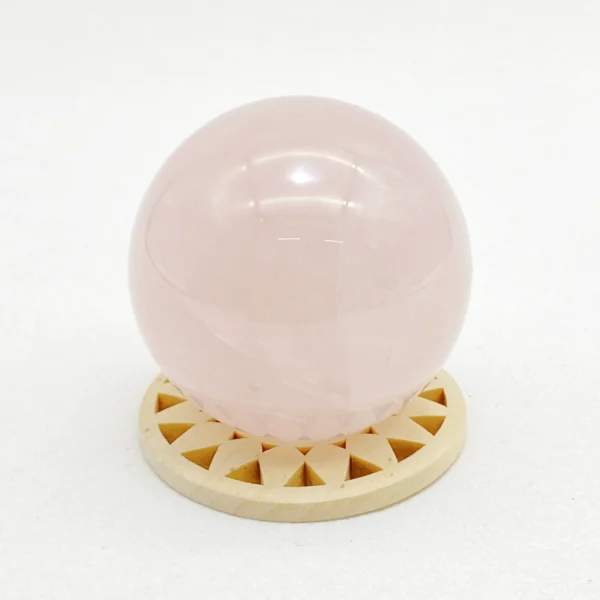
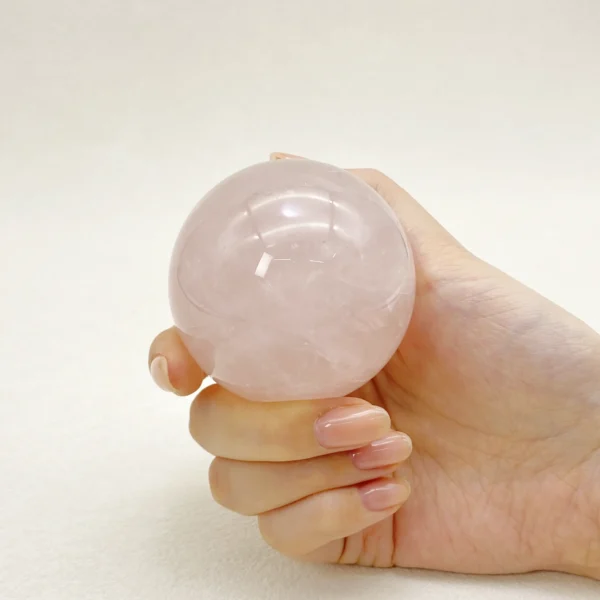
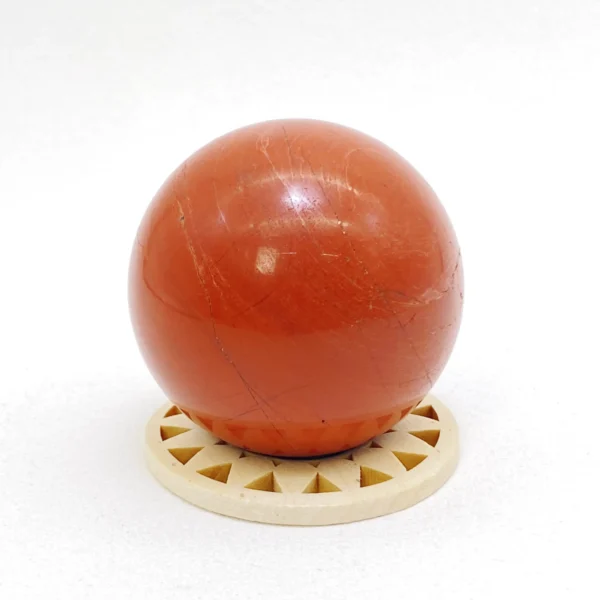
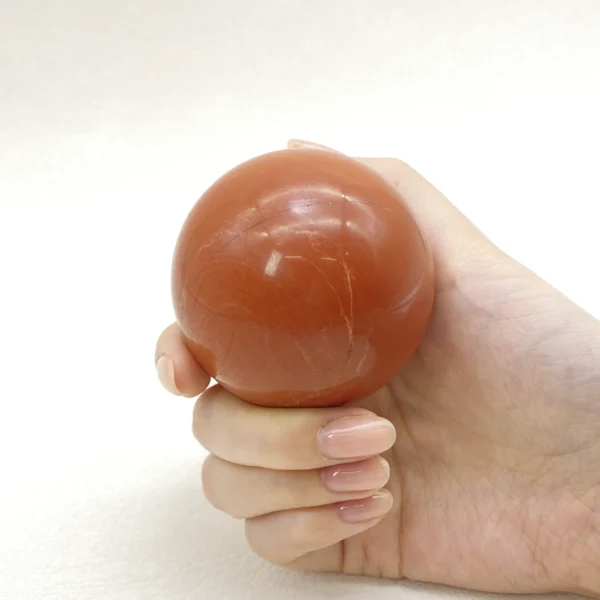
Form factor. Think about how you plan to use it before choosing a size or form. A large raw cluster is striking but impractical for daily carry. A small tumbled piece is ideal for pockets and meditation, but may not have the presence you want for room placement. Points and towers are directional and work well for intentional practice, but are awkward to hold. Spheres radiate evenly and work well as display pieces. Palm stones are purpose-built for hand-holding during meditation. Match the form to the function.
Authenticity. Common crystals like rose quartz, amethyst, and citrine are frequently faked or misrepresented at lower price points. Before purchasing anything in the low-to-mid price range, it’s worth knowing the basic authentication checks for the stone you’re buying. For rose quartz specifically, how to check authenticity before buying covers the key tests — and the same principles of checking for natural inclusions, consistent color distribution, and appropriate hardness apply across most common crystals. For the specific risks and red flags when buying on marketplaces like Amazon, our online buying guide covers what to watch for before you order.
Price calibration. Genuine crystals of reasonable quality are not expensive — amethyst, rose quartz, black tourmaline, and carnelian are all affordable at small to medium sizes. If a price seems unusually low for the size and apparent quality, that’s worth investigating rather than assuming you’ve found a good deal. If a price seems unusually high for a common stone with no clear exceptional quality, comparison shopping is appropriate.
Putting the Framework Together: A Worked Example
Someone who searches “how to choose the right crystal” often has a specific situation in mind but isn’t sure how to translate it into a stone. Here’s how the three-step process works in practice:
Situation: Feels anxious at work, struggles to concentrate, wants something to keep at their desk.
Step 1 (Need): Mental restlessness, concentration, workplace energy. Shortlist: amethyst, fluorite, clear quartz, black tourmaline.
Step 2 (Feel): In the shop, black tourmaline feels grounding but heavy for a desk context. Clear quartz feels clean and adaptable. Amethyst feels immediately calming. Fluorite is beautiful but doesn’t produce a strong response. Choice narrows to amethyst or clear quartz.
Step 3 (Practical): Both are durable and low-maintenance. Amethyst fades in direct sunlight, so the desk placement matters — near but not in a sunny south-facing window. Clear quartz is completely stable in any position. Tumbled pieces of both are available at accessible prices, and authentic specimens are easy to source.
Result: Either works. Amethyst if the primary issue is anxiety and mental noise. Clear quartz if the primary goal is intentional focus work. Buy one, try it for three weeks, and expand from there.
FAQ
What if I’m drawn to multiple crystals at once? Choose one for now. The pull toward multiple stones often reflects multiple needs, which is real, but addressing one at a time with genuine consistency is more effective than dividing your attention across several stones simultaneously. Make a note of the others and return to them after you’ve established a practice with the first choice.
Is there a difference between buying in person and buying online? The intuitive selection layer is easier in person because physical handling gives you direct sensory information. That said, buying online from reputable sellers with detailed descriptions and genuine photographs is entirely valid — many people build effective collections entirely online. The practical checks in Step 3 become more important when you can’t handle the stone first.
What if a crystal doesn’t feel like anything when I hold it? This is common and not a sign that you’re doing something wrong or that the stone is fake. Sensitivity to crystal energy varies widely between people, and many people develop it gradually rather than experiencing it immediately. A stone that feels inert isn’t necessarily ineffective — work with it consistently for two to three weeks and assess the results in your daily life rather than in the moment of holding.
Can I choose a crystal based on my zodiac sign or birth month? Zodiac and birthstone associations are a valid framework if they resonate with you — they provide a structured way of narrowing options that works for some people. But they’re not more reliable than the need-based approach for most situations. Use them as a secondary consideration rather than the primary basis for selection, particularly if the traditionally associated stone doesn’t address your actual current need.
What if the crystal I’m drawn to is expensive? Reconsider whether the price reflects genuine rarity or primarily reflects marketing. Many crystals are expensive because they’re rare or because their commercial presentation is elaborate — not because they’re more effective than accessible alternatives. Rose quartz does what it does whether it costs three dollars or thirty. If budget is a constraint, prioritise need-matching over visual impressiveness.