Sleep problems are not all the same problem.
There’s the kind where you fall asleep fine, but wake at 3 am and can’t get back. There’s the kind where your mind runs at full speed the moment your head hits the pillow. There’s anxiety-driven sleep disruption — the worry loops that hijack the transition from waking to sleep. And there’s the kind where you sleep for seven hours and wake up feeling like you didn’t sleep at all.
The crystals that help most depend on which of these you’re dealing with. A stone that’s perfect for racing-thought insomnia isn’t necessarily the right tool for early waking or light, unrestorative sleep. This is where most “best sleep crystals” lists fall short — they treat insomnia as a single thing. It isn’t.
This guide covers the six most consistently effective crystals for sleep, matched to the specific sleep problem each addresses best. For the full picture of how sleep crystals fit into a broader crystal practice, our complete guide to healing crystals gives the wider context.
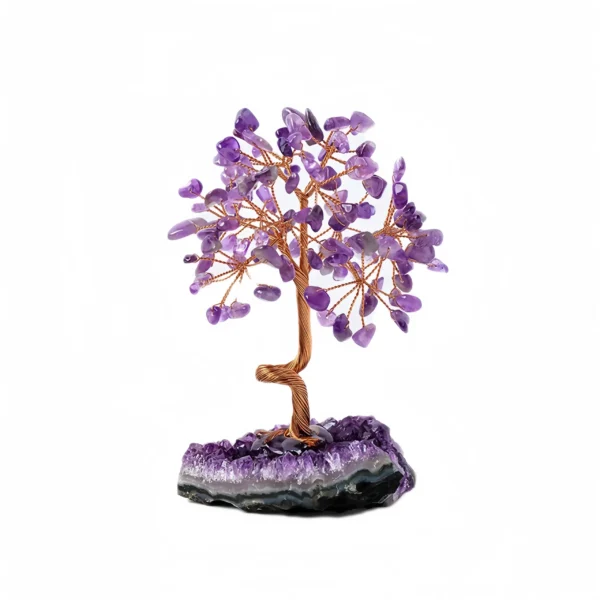
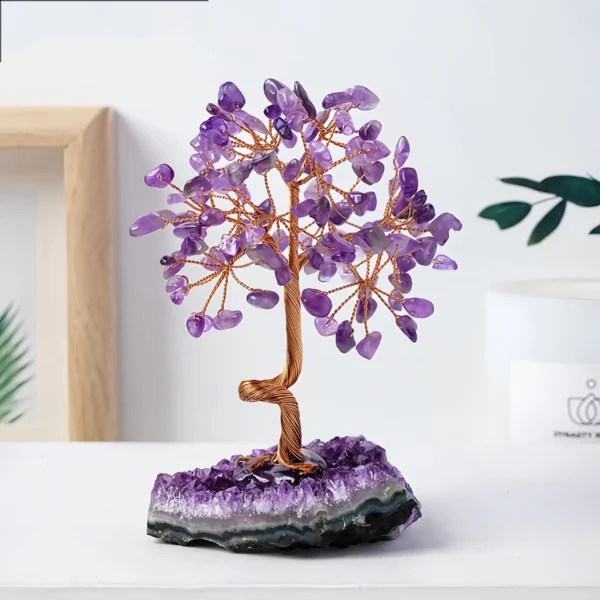
Amethyst: The Most Versatile Sleep Stone
Almost everyone who works with crystals for sleep starts here. For good reason — amethyst’s quieting effect on mental activity addresses the most common sleep complaint: a mind that won’t stop.
The purple quartz works at the cognitive layer of wakefulness. When you’re lying in the dark replaying conversations, planning tomorrow, or simply unable to stop thinking without any clear emotional charge driving the thoughts — that’s where amethyst is most useful. It doesn’t knock you out. It lowers the volume on the mental noise that keeps you from crossing into sleep naturally.
On the bedside table is the standard placement. Close enough to be within your energy field as you sleep, distant enough that you’re not aware of it after the first few minutes. If you prefer something closer, a small tumbled piece under the pillow is worth trying — though whether amethyst under the pillow actually works is a more nuanced question than it first appears, and that guide covers what to expect from each placement.
One genuine advantage amethyst has over other sleep stones: it’s forgiving. Wrong placement, inconsistent use, not cleansing it as often as you should — it still does something. For people who want to start with crystals for sleep and don’t want to get it precisely right, amethyst is the most accessible entry point.

Howlite: For Racing Thoughts and Overthinking
Howlite doesn’t get enough attention for sleep. It should.
Where amethyst creates a general quieting of mental activity, howlite works more specifically on the overthinking subtype — the analytical mind that can’t stop processing. The practical difference is subtle but real. Amethyst for the mind that simply won’t stop. Howlite for the mind that keeps finding things to think about, then more things, then more.
The stone is white to grey-white with grey veining, soft in colour and in energy. Mohs 3.5 makes it one of the more delicate common crystals — keep it away from harder stones in storage. It’s relatively affordable and often available in carved shapes like skulls or hearts, though a simple tumbled piece works as well as anything.
Under the pillow is howlite’s most effective sleep position because of how it works — through sustained close proximity to the head during the specific period when the overthinking pattern is most active. Unlike some stones that benefit from distance for sleep use, howlite’s gentle energy doesn’t create overstimulation at close range.
Give it two to three weeks. The shift is accumulative, showing up as a slightly shorter gap between lying down and falling asleep, rather than as a dramatic single night’s difference.
If you’re trying to decide between these two specifically, the direct comparison breaks down which one actually addresses your problem.
Selenite: For the Sleep Environment Itself
Selenite doesn’t work on you directly. It works in the room.
This distinction is underappreciated. Some sleep problems aren’t rooted in the person’s internal state — they’re rooted in the energetic quality of the sleep environment itself. Spaces that carry accumulated emotional weight, rooms shared with anxious or stressed energy, bedrooms that also function as work spaces — these create an ambient energetic quality that undermines rest regardless of how settled the individual feels.
Selenite placed in the bedroom — on a windowsill, on a dresser, or on a shelf — raises the vibration of the space gradually. Most people don’t notice the shift on the first night. After a week or two, the room feels different in a way that’s difficult to articulate but consistent. Lighter. Quieter.
A selenite wand laid across the bedside table is particularly practical. Its self-cleansing quality means no maintenance. Never put it near water or in high-humidity areas — it’s gypsum and will deteriorate.
If you find you sleep poorly in your own bedroom but well elsewhere, or that you sleep significantly worse after emotionally charged days at home, selenite is worth prioritising over stones that work primarily on the individual.

Lepidolite: For Anxiety-Driven Sleep Disruption
Some people can’t sleep because they’re anxious. The anxiety is the primary problem — the sleep disruption is the symptom.
These are different things, and they respond differently to crystals. Addressing sleep disruption when the root is anxiety requires working on the anxiety itself, not just the sleep surface layer. Amethyst helps with this. Lepidolite addresses it more specifically.
The lithium content in lepidolite and what it does or doesn’t contribute physiologically has been covered honestly in the dedicated lepidolite anxiety guide. For sleep purposes, the practical upshot is this: for people whose sleep disruption is driven by worry, fear, or emotional overwhelm rather than physical restlessness or cognitive busyness, lepidolite works on the layer that other sleep stones don’t reach as directly.
Bedside table or under the pillow — both work. Pair it with amethyst if the anxiety has both a cognitive and emotional dimension. Keep it away from water during cleansing; its layered mica structure delamitates with repeated moisture exposure.
For a comprehensive look at which crystals help most when sleep disruption is anxiety-driven, that guide covers the full range of anxiety-first approaches.
Moonstone: For Unrestorative Sleep
This is the underserved category. People who sleep, technically — they log the hours — but wake feeling unrefreshed, like the sleep didn’t do its job.
Moonstone is associated with the sleep cycle itself rather than with the transition into sleep. Its traditional connection to lunar rhythms and intuitive states maps onto what we now understand as REM and deep sleep — the stages where the brain processes and restores. Whether the mechanism is energetic or simply about creating environmental conditions more conducive to cycling through deep sleep stages, the practical reports are consistent.
It’s gentler and more subtle than the other stones on this list. Some people don’t notice anything for the first week. Others find the quality of their dreams changes before they notice anything about the depth of sleep.
Moonstone varies considerably by source. Rainbow moonstone — actually a variety of labradorite — produces the most striking visual effect, but isn’t technically moonstone. Both work for sleep purposes. Avoid synthetic versions, which are common at very low price points and produced with none of the geological history that characterises natural specimens.
Wear it as a pendant or place it at the head of the bed. The key distinction from other sleep stones is proximity to the head rather than the chest — moonstone’s sleep work happens at a slightly different layer.
Black Tourmaline: For Disrupted Sleep From External Causes
Not everyone’s sleep problem is internal.
Shared sleep spaces, homes with significant emotional traffic, sensitivity to the energy of the person sleeping next to you — these external factors create sleep disruption that no amount of internal calming stone work fully addresses. The issue isn’t your anxiety or your racing thoughts. The issue is permeability — your nervous system’s tendency to absorb ambient energy from the surrounding environment during the vulnerable state of sleep.
Black tourmaline at the foot of the bed or just inside the bedroom door creates an energetic boundary around the sleep space. It doesn’t create a wall. It reduces permeability — the threshold at which external energy affects your own state.
For people who sleep alone in a quiet environment and don’t have energetically sensitive tendencies, black tourmaline probably isn’t your primary sleep stone. For people who sleep next to a restless or anxious partner, or who live in high-traffic or emotionally heavy environments, it’s often the most immediately effective option on this list.
The foot-of-bed placement is specific for a reason — black tourmaline’s grounding effect comes through slightly differently from that position than from a bedside placement. Some people find it too activating when kept close to the head; grounding energy that’s useful during the day can feel slightly alerting at close range during sleep.

Matching Stone to Sleep Problem
| Sleep problem | Primary stone | Supporting stone |
| Can’t turn mind off | Amethyst | Howlite |
| Overthinking and analysis loops | Howlite | Amethyst |
| Anxiety driving the disruption | Lepidolite | Amethyst |
| Room feels heavy, sleep poor in own space | Selenite | — |
| Sleep enough hours but wake unrefreshed | Moonstone | Selenite |
| Sensitive to partner’s or ambient energy | Black tourmaline | Selenite |
| Multiple dimensions at once | Amethyst + lepidolite | Selenite in room |
Most people have more than one thing going on. That’s fine. Two stones covering complementary dimensions — one for the internal state, one for the environment — is a more complete approach than a single stone trying to do everything.
Placement That Actually Matters
Where you put the stones is not incidental. The bedside table, under the pillow, at the foot of the bed, in the four corners of the room — these aren’t interchangeable, and the stone that works well in one position can be subtly counterproductive in another.
The principles: stones working on mental states (amethyst, howlite) work best at close range to the head. Stones working on grounding and protection (black tourmaline) work better at the foot of the bed or the room’s perimeter. Stones working on the environment (selenite) are effective anywhere they’re visible and maintained. Stones working on the sleep cycle itself (moonstone) benefit from head proximity.
For a complete guide to where to place sleep crystals in your bedroom — including room configuration for different sleep setups — that guide covers the spatial logic in more detail.
A Note on Consistency
This comes up in every crystal guide and is still the thing most people get wrong.
Sleep is one of the domains where inconsistent use produces no cumulative benefit. The nervous system needs repeated signals to recognise a cue. A stone that’s on the bedside table every night for three weeks creates a conditioned association. The same stone used twice this week, once next week, and then forgotten for ten days creates nothing.
Three weeks of consistent placement. That’s the minimum evaluation window. If a stone isn’t producing any noticeable effect after three weeks of nightly presence, it’s worth switching to a different primary stone — not abandoning the practice.
Caring for Sleep Crystals
Sleep stones work hard. Six to eight hours of close proximity while the body and nervous system are in their most receptive state is significant energetic work, even for stones that aren’t in direct contact with the body.
Monthly cleansing is the absolute minimum for stones in regular sleep use. Fortnightly is more appropriate for stones under the pillow or held during the night. Moonlight cleansing suits sleep stones particularly well — the lunar connection is fitting, and leaving them on the windowsill overnight during the full moon takes no effort.
For a full breakdown of which methods are safe for each stone and how often to cleanse, how to cleanse your sleep crystals covers every option. The practical note: lepidolite cannot go in water, howlite is fragile at Mohs 3.5, and selenite cannot go near moisture at all. Check before using water-based cleansing methods on any of these.
For the specific question of holding a stone as you fall asleep — and what happens once your grip naturally releases — our dedicated guide to holding crystals at night covers it in full.
FAQ
What are the best crystals for sleep? Amethyst for mental quieting, howlite for overthinking, lepidolite for anxiety-driven disruption, selenite for the sleep environment, moonstone for unrestorative sleep, and black tourmaline for sensitivity to external energy. The right stone depends on what’s actually disrupting your sleep — see the matching table above.
How long does it take for sleep crystals to work? Black tourmaline’s protective effect is often noticeable within the first few nights. Amethyst and howlite typically show their cumulative effect after one to two weeks of consistent placement. Moonstone is the slowest — most people need three to four weeks before noticing changes in sleep quality. None of these work dramatically on night one.
Can I use multiple sleep crystals at the same time? Yes, and often it’s more effective. Two stones covering different dimensions — amethyst on the bedside for mental quieting and selenite on the windowsill for the room — work together rather than competing. Avoid placing too many different stones under the pillow simultaneously; more than two becomes physically uncomfortable and energetically cluttered.
Should I hold a crystal while I fall asleep? Some people find holding a stone during the falling-asleep period helpful — it gives the mind something physical to attend to during the threshold between waking and sleep. Amethyst and howlite are the most practical choices for this because they’re durable enough that dropping them during sleep doesn’t damage anything. Softer stones like howlite or lepidolite are better under the pillow than actively held.
Do sleep crystals affect dreams? Moonstone is the stone most consistently associated with more vivid or meaningful dreams. Amethyst can deepen the emotional tone of dreams during periods of active inner work. Most stones don’t produce noticeable dream effects — the primary work happens at the level of sleep quality rather than dream content.
What if sleep crystals don’t help? Give it three weeks of consistent nightly placement before concluding they’re not working. If there’s still no effect, consider whether the sleep problem might have a physical root — sleep apnoea, hormonal changes, or chronic pain — that crystals can’t address. Sleep disruption from physical causes needs medical evaluation, not a different crystal.